
If you ask Increte Systems Inc.’s marketing director, Mike Lowe Jr., what makes his company head and shoulders above the rest, he’ll tell you the answer to that question is easy. “We really are the only company that manufactures every component of all of our systems,” from the ad mixtures, coloring agents and sealers to the stamping tools and form liners.
“We’re a one-stop shop,” he adds with confidence when describing the 39-year-old Florida-based company founded by his father and company president, Mike Lowe Sr. If something goes awry with a job, “You can just pick up the phone, call our free tech support line and one of our representatives will walk you through the situation,” unlike the runaround you may experience if you’re using several companies’ products and each claims the issue is someone else’s fault.
Education, education, education
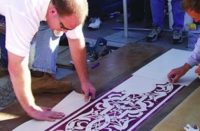
Beyond offering a complete package deal, there’s one other thing that makes Increte Systems stand out. “We were the first company to institute a training program,” Lowe says, noting its first seminar was held in 1988. “We won’t sell our products to contractors who haven’t taken one of our training seminars,” he says with obvious pride. “No other company that I know of has that requirement in place.” To date, Increte has trained more than 7,500 contractors.
 “We feel when a decorative concrete job fails, it’s typically because of poor training or lack of training. There are lots of shortcuts and misinformation out there and we want to make sure our contractors are trained properly how to use our products,” Lowe says. Because when a product fails to do what it’s designed to do, it’s not just bad for Increte’s business, it’s bad for the decorative concrete industry as a whole.
Increte Systems, which is headquartered just outside of Tampa, has dedicated 40,000 square feet for training purposes. Lowe explains his company holds its two-day, hands-on seminars, which includes classroom instruction, on site about 10 times a year. By the year’s end, it will have conducted 130 seminars.
 A solid line up
To date, Increte markets eight different systems:
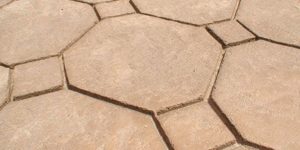
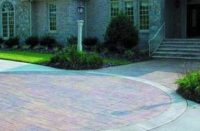
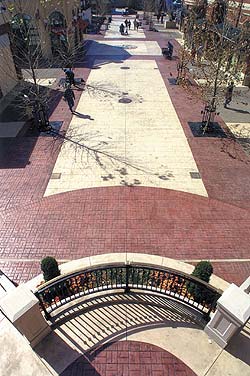
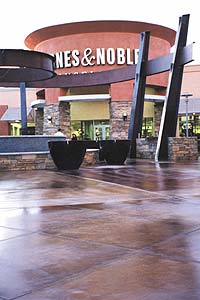
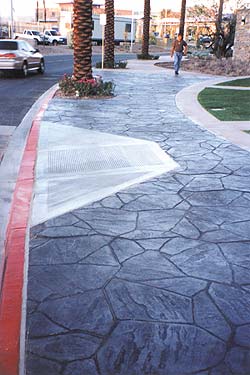
—Increte: The company’s most popular product, Increte is a stamped concrete system “Second Only to Nature.” The realistic system-whose molds are pulled off the real thing-is available in a wide array of patterns duplicating granite, slate, stone and brick in a wide assortment of colors.
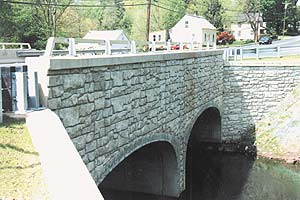
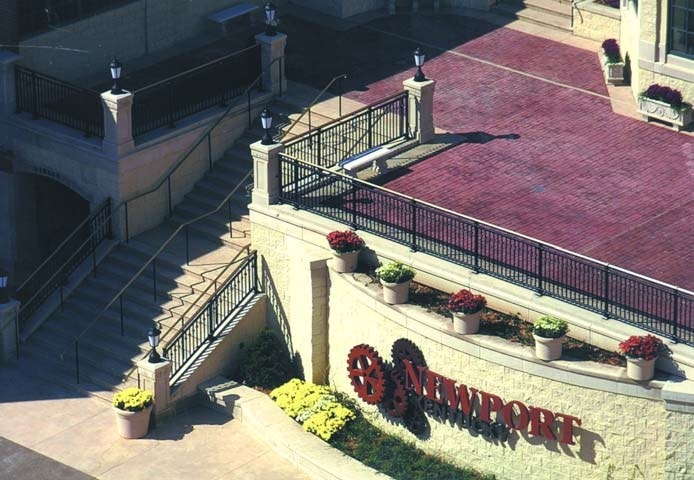
— Stone-Crete: A cast-in-place architectural wall system that duplicates the look of hand-laid stone.
— Color-Crete: An integral coloring system for concrete available in 30 standard colors.
— Stain-Crete: A penetrating stain system designed to created mottled color tones on both new and existing concrete.
— Texture-Crete and Spray-Deck: Decorative overlay systems designed to transform ordinary or unsightly concrete into bold and textured surfaces. Touted as the “ultimate cover-up,” the products create a surface that is both slip-resistant and cool to the touch with a strength twice that of regular concrete.
— Thin-Crete: A stamped overlay system designed as a cover-up for existing concrete surfaces, eliminating the expense of concrete replacement.
— New-Crete: The newest addition to Increte’s offerings, New-Crete is a self-leveling, fast-set floor topping that can be applied to existing surfaces and walked on in three to fours hours.
“What’s so exciting about this product are businesses, such as restaurants or those in a shopping center, will no longer have to shut down so contractors can tear up and replace old, worn-out concrete. Floors can be functional in as little as four hours,” Lowe says about the polymer cementitious overlay system that’s compatible with Increte’s stain system. Also, he adds, its 6,000 psi makes for a durable surface, almost double the strength of regular concrete.
 Stamped concrete: A solid alternative
A subsidiary of Inco Chemical — a company that’s manufactured sealers, stains and epoxies since 1963 — Increte Systems entered the decorative concrete market as a natural progression, adding stamped concrete and overlay systems to its coatings and colorings offerings. Today, Increte is used in 70 countries throughout the world, including all 50 U.S. states.
“We’ve been overseas for 11 years now,” Lowe says. And aside from a few formula adjustments they’ve made to allow Increte’s products to work properly in different climates, it’s pretty much business as usual.
Stateside, “Interlocking pavers are our largest competition,” Lowe laments, while abroad people lean toward natural materials over stamped concrete. “In Europe, people tend to want the real thing and it’s an uphill battle against real cobblestone and slate. Our products have to be as realistic as possible and we sell on their functionality.”
It’s Lowe’s job to get consumers to access the total life cost of a project and realize that stamped concrete is more cost effective and doesn’t have the inherent maintenance issues associated with the real thing. As for pavers, an old technology that has been in use for hundreds of years, “It’s nowhere near as good a system as stamped concrete,” he says.
For pavers to work best, they need to be installed over a slab of concrete, Lowe points out. If they’re installed over hard-packed sand or dirt fill, there will be settling, shifting and washouts. “So if you’re going to pour concrete,” Lowe rationalizes, “you may as well stamp it to achieve the look you want.”
Solid footings in the future
Through training, tech and marketing support and its involvement in more than 15 tradeshows a year, Increte Systems hopes to educate both consumers and contractors about the benefits of decorative concrete. “I think it’s in its infancy right now,” Lowe says. And in the near future, “People will expect a decorative finish to be standard rather than an upgrade. I don’t necessarily mean stamped concrete but maybe colored concrete or a textured border. As soon as more people realize that we can do most anything with concrete, they won’t go back to plain old, gray concrete if they’ve got a choice.”
Lowe points out there is a healthy balance between new construction and decorative remodeling that he sees continuing in the next 10 to 20 years. “We’re going to see the decorative market share grow, with no end in sight,” he predicts, noting that he thinks renovation products will be especially huge, as more consumers want to decorate those plain slabs with everything from stains and overlays to textures and spray-on colors.
He also notes that integrally colored concrete, which has been big for years in the southwest, is starting to spread across the country. But, he’s quick to add, color hardeners are still the way to go with stamped concrete for a realistic, durable finish.
His advice to contractors who want to help themselves to a large slice of the decorative concrete pie in the years to come: “Offer a wide range of options to your customers in a wide range of prices. You need to know how to deliver everything from cast in place to overlays if you want to be out in front of the industry.”