Welcome to Concrete Decor Magazine Online,
The Journal for Professional Concrete Contractors
   
 
ADVERTISEMENTS
 
Concrete Decor Archives — Focus on Education
Concrete Countertop Institute 1


The Concrete Countertop Institute

The Concrete Countertop Institute (CCI) offers comprehensive education and resources for all aspects of concrete countertops. The Institute has recently added classes on creating cast-in-place countertops, marketing and selling countertops, and advanced sink fabrication. It is also a source for materials that have been unavailable to most fabricators, including specialized ingredients, pigments and admixtures, as well as a comprehensive array of tools and tooling used in the fabrication process.
Concrete Countertop Institute 2

The Institute was founded in response to the growing popularity of concrete countertops and the need for substantial education regarding their fabrication. Jeff Girard, its founder, is a licensed, professional civil engineer who believes that the key to success lies in comprehensive education, expert technical support and training that goes beyond designing highly stylized countertops. CCI's hands-on training is based on fundamentals and engineering principles, with the focus on efficiency, simplicity and quality. For instance, students learn how reinforced concrete works structurally, how the ingredients in concrete work together, and the importance of proper reinforcing.

You don't have to be a designer
Girard's philosophy is, “Concrete countertops are countertops. You will be relieved to hear that most people just want a flat, standard-thickness countertop, just like every other type of countertop, that happens to be a beautiful color and sheen because it is made out of concrete. You don't have to be an artist or a designer unless you want to be.”

Concrete Countertop Institute 3

Girard's wife, Lane Mangum, teaches CCI's sales and marketing class. She teaches that relationships with kitchen designers are the key to success in a concrete countertop business. The class includes scripts and role-playing to teach students how to work effectively with kitchen designers.

Students also learn how to help clients with basic design decisions when there's not a professional designer involved. Mangum notes, “Homeowners do sometimes look to their concrete countertop fabricator to collaborate with them on design ideas, but usually those ideas are limited to color, edge details, whether to have a drain board, and the placement of a few embedments such as some copper accents.”

You don't have to be an engineer
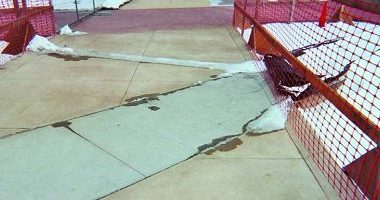
You don't have to be an engineer to make concrete countertops, but you do need to understand some basic engineering principles. Girard emphasizes that concrete countertops, unlike sidewalk slabs, are structural beams, and that this has deep-reaching implications that have largely been ignored or misunderstood. Sidewalk slabs are designed to be fully supported by a compacted sub-base, which itself is an engineered foundation. Countertops, on the other hand, are supported by cabinets.

Concrete Countertop Institute 4

There are two essential components to the performance of a concrete countertop: compressive strength and tensile strength. There are high-quality concrete countertop mixes available that can achieve compressive strengths approaching 11,000 psi. This refers only to compressive strength. Concrete generally cracks due to lack of tensile strength. The only way to ensure proper tensile strength is with proper reinforcing. Girard provides the following example:

  • Take a non-reinforced 10' x 2' x 1.5" concrete countertop slab that has a compressive strength of 11,000 psi and a tensile strength of only 630 psi. That slab is guaranteed to break when lifted by the ends.
  • When properly reinforced, that same slab can withstand a 250-lb person standing in the middle of it with no cracking.

CCIs classes teach mix designs and reinforcement designs that provide both compressive and tensile strength. Girard does not expect students to understand the engineering formulas. He gives them the step-by-step procedures that will result in high-performance countertops.

Concrete Countertop Institute 5

You do have to be a craftsman
The level of finishing detail required is different for countertops than for floors. Because concrete countertops are 3 feet off the ground, they are under much more scrutiny than concrete floors. And people prepare food on them. This means that the countertops must be very smooth and completely free of pinholes. “The good news is, most of my students are already craftsman because they do excellent work in concrete floors,” Girard notes. “I just teach them the criteria for countertops, and they embrace the challenge of quality craftsmanship.”

 
This Issue
Concrete Decor, Vol. 5, No. 2
April/May 2005
Concrete Decor Vol 5 No 2
 

Stay informed!
Enter your e-mail address
and subscribe to the
Concrete Decor Newsletter.


Other articles in this issue:
Layering with acid stains
Decorative Concrete Design
Concrete Curbs and Landscape Curbing
Contractor Profile: Becker Architectural
Manufacturer Profile: Symons
Tooling: Brooms for Concrete
Final Pour: Tsunami-inspired Concrete Art
Decorative Concrete Tips
Concrete Industry News
Concrete Association News
Product News
Product Profile


© 2007 Professional Trade Publications, Inc. Unauthorized reproduction of any
information on this site is a violation of existing copyright laws. All rights reserved.