Zip Code     Max Radius      Go
Concrete Decor Magazine, the Journal of Decorative Concrete. | Subscribe Now! »
Concrete Decor Archives
Concrete Decor Archives — Tooling
Pervious Concrete


Coloring Pervious Pavement

With the addition of color and increased attention to texture and detail, pervious concrete is now being specified for public parks, fine residences, and other hardscapes where appearance is as important to the environment as drainage.
by Nick Paris and Michael Chusid

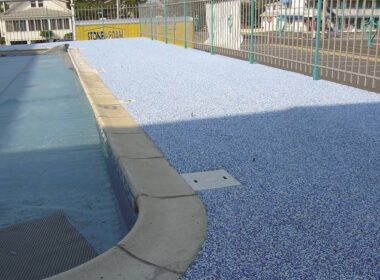
When it rains, it drains. That is the primary reason why pervious pavement is rapidly gaining in popularity. A second reason, however, is that many concrete contractors have learned to produce attractive and more decorative pervious pavement. With the addition of color and increased attention to texture and detail, pervious concrete is now being specified for public parks, fine residences, and other hardscapes where appearance is as important to the environment as drainage.

Environmental alternative
Water cannot penetrate traditional pavement, so rainwater has to be directed away from paved areas. This increases the cost of a project by requiring larger capacity storm drains and retention basins. Ordinary pavements also increase the potential for flooding due to rapid run-off of storm water from paved areas throughout an urban or suburban watershed. And as water sheets across the surface of ordinary pavement, the “first flush” washes contaminants from the pavement into the storm system and contributes to downstream pollution.

Pervious Concrete

To avoid these problems, environmentally conscientious designers and builders are increasingly using pervious portland cement pavement, also referred to as porous pavement. Pervious pavement allows surface water to drain through an open-pored concrete and into the soil below. This not only avoids problems with run-off, but also allows rainwater to percolate into the soil, where it can recharge groundwater and benefit nearby landscaping. Most pollutants entering the pavement are removed by filtration in the pavement's base course or digestion by microorganisms in the soil. Moreover, the pervious concrete allows air to infiltrate the soil, making it practical to pave under the drip line of trees without suffocating them. For these reasons, pervious pavement has been recognized as a Best Management Practice for storm water management by the U.S. Environmental Protection Agency. Pervious pavement can also help meet the storm water management criteria of the US Green Building Council's Leadership in Energy and Environmental Design, LEED Credits SS-6.1 and SS-6.2.

What is pervious pavement?
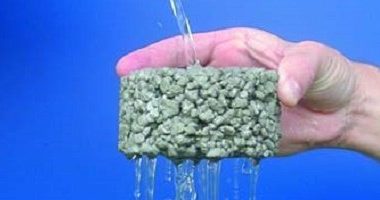
Pervious portland cement concrete is typically made with narrowly graded coarse aggregate, little or no fine aggregate, and a very low water/cementitious materials (w/cm) ratio. The result is a stiff, pebbly mixture with 15 to 25 percent of its volume being interconnecting pores through which water can flow. As an emerging alternative, several recently introduced systems use fine aggregates with proprietary admixtures to assure porosity.

Pervious Concrete

Installing pervious pavement differs in a number of respects from conventional concrete pavement. The concrete is typically placed on a base course of clean, gap graded gravel or crushed rock that acts as a reservoir to hold water until it can infiltrate into the soil. The concrete is placed in conventional forms except that a screed strip 1⁄2 inch to 3⁄4 inch high is placed on top of the forms. After the concrete is placed, the screed strips are removed and a vibratory screed is used to compact the concrete to the required density and thickness, usually about 6 inches. The material is not floated or troweled. Instead, a heavy pipe roller is used to compact the concrete further.

Before venturing into their first large project, contractors should take time to consult with their ready-mix concrete producers and to seek competent technical assistance. The National Ready Mixed Concrete Association (NRMCA) and many regional concrete trade promotion groups have qualified field representatives who can help. NRMCA has also introduced a program to certify pervious concrete craftsmen, and the American Concrete Institute (ACI) is writing standards that will provide guidelines. Resources listed at the end of this article provide guidelines for the subgrade, base course, and pavement engineering, concrete mixture design, and typical installation techniques.

Pervious Concrete

Aesthetic considerations
The listed publications, however, do not have much to say on the aesthetics of pervious pavement. After more than a decade of experience with pervious concrete in the United States, builders now have enough confidence in the product that they are starting to pay attention to its aesthetics as well as its function.

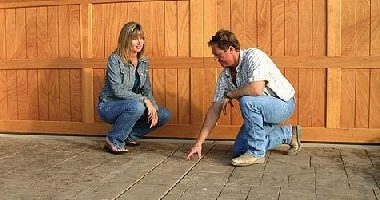
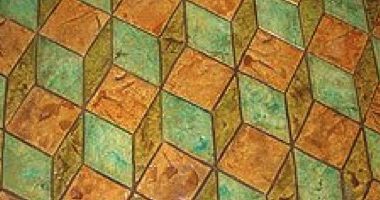
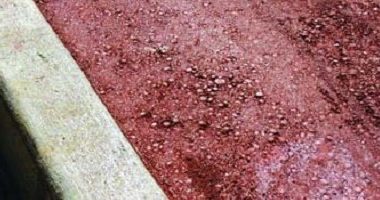
Color, for example, has become an important pervious pavement design element. In visually sensitive areas, natural earth tones can be used to help pavement blend in with the surrounding landscape — whether it is a parking lot in a public park, a path through a garden, service lanes cutting across a lawn, or a driveway in your own front yard. Alternately, the use of a complementary or contrasting color can help a pavement stand out — this can help visitors locate an entrance, improve the visibility of roadway shoulders and traffic islands, or create separate vehicular, pedestrian, and bicycle lanes.

Pervious Concrete

Integral color: Colorants used in pervious concrete should comply with ASTM C979 — Pigments for Integrally Colored Concrete. Iron oxide pigments are most frequently used for the wide spectrum of earth tones; other mineral oxides are used to create shades of green, yellow and blue. Unless it is desired to have a black or dark gray concrete that fades over time, standard carbon black pigments are not suitable for use in pervious concrete because of their potential to leach out of concrete exposed to wet and dry cycles.

The dry mixtures used for pervious concrete require special attention to assure that colorants disperse uniformly throughout a batch; concrete producers should contact their pigment supplier for assistance in determining optimum procedures for adding colorants. While satisfactory results can be achieved with concentrated powder pigments, liquid colors may be more reliable because they are already in solution and can disperse readily in dry mixtures. The water contained in liquid colors and any water added by an automatic dosing system must be subtracted from the amount of batch water added to the concrete.

Another benefit of liquid colors is that they are compatible with automated coloring systems. The automated systems create increased design flexibility by allowing ready mix producers to create an almost unlimited number of custom concrete colors. The automated systems simplify quality control by precisely metering even very small dosages of pigments and creating a record of how much color goes into each batch.

Pervious concrete tends to be darker than other types of concrete because of the low w/cm in the mixture. This means that colored concrete will have a darker or more intense shade than it would in an ordinary concrete mixture with a similar pigment dosage. Other factors that affect the concrete color include the color of the cement, any supplementary cementitious materials such as fly ash, and the aggregate. For a detailed discussion of factors influencing concrete color, a copy of “Ensuring the Quality of Colored Concrete Finishes” is available from the authors.

next ›››
 
This Issue
Concrete Decor, Vol. 5, No. 6
December/January 2006
Concrete Decor, Vol 5, No 5


Stay informed!
Enter your e-mail address
and subscribe to the
Concrete Decor Newsletter.


Other articles in this issue:
Brush up on Brushed Finishes
Stenciling Existing Concrete
Slip Resistance
Cold Weather Stamping
Opaque Coatings
Decorative Concrete Panels
Vertical Stamped Tiles
Artisan in Concrete: Seamless Floor Coatings
New Technology: Pervious Concrete
Manufacturer Profile: Arch-Crete
Tooling: Decorative Forms
Project Profile
Product Profiles
Product News
Final Pour
Concrete Industry News
Concrete Association News
Decorative Concrete Tip