Search
Subscribe
  • Concrete Decor Show
  • Customer Support
  • Contact Us
  • Advertising
  • About Us
  • Home
  • Departments
  • Archives
  • Digital Issues
  • Blogs
  • Products
  • Training
  • Videos
  • Bookstore
  • Science
Concrete Decor Archives — Tooling

Pervious Concrete

...continued

Coloring Pervious Pavement

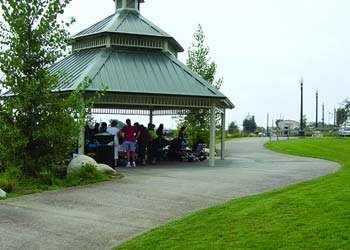
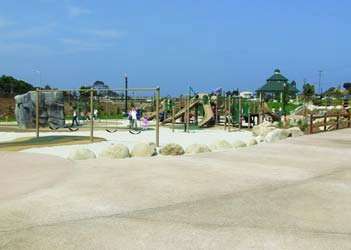
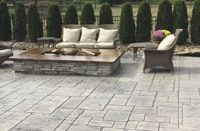
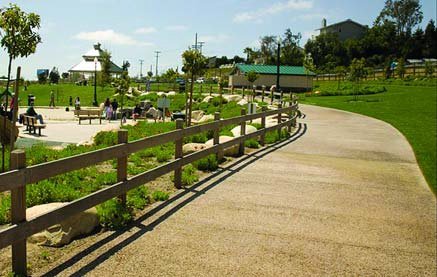
With the addition of color and increased attention to texture and detail, pervious concrete is now being specified for public parks, fine residences, and other hardscapes where appearance is as important to the environment as drainage.
by Nick Paris and Michael Chusid

Texture and pattern: Pervious concrete has a rough, open texture that has been compared to a rice cake. Color may be more pronounced because the rough texture reduces the glare associated with conventional concrete pavement. The size and shape (round or angular) of the coarse aggregate in a mixture are significant visual design variables.

At present, it is not practical to pattern-stamp typical pervious concrete. The rough texture and absence of fines prevents the material from taking on the texture of conventional stamping tools. While the old-style aluminum “cookie cutter” stamping tools might create an impression, the stiff, highly compacted concrete's short working time makes them impractical as well, and the edges of stamped patterns would be prone to ravel (crumble). This situation may change, however, since the recently introduced pervious concrete made with fine aggregates and proprietary admixtures appear to be easier to emboss.

Pores in pervious concrete can become filled with silt and other particulate matter. This can affect appearance, particularly if the fill is deeper in some portions of the slab than in others. Periodic vacuuming or power washing will restore the appearance of the pavement as well as assure its continued ability to drain.

As with any concrete, surface wear can erode the cement paste from the surface of a pavement. When this happens, exposed aggregate can have an effect on the pavement's appearance. So far, experience has shown that the erosion due to traffic is not significantly greater in pervious concrete than it is in conventional concrete so long as it is not used in areas of high-speed traffic. On the other hand, erosion due to water is reduced because liquids enter the pavement instead of draining across the surface.

Pervious Concrete

Joints and score lines: The low w/cm used for pervious concrete reduces the potential for shrinkage cracking. This allows joints to be spaced at greater distances than in conventional paving or to be eliminated altogether. This changes the visual scale associated with concrete panels. Joints are best formed in the compacted concrete with a flanged roller. Joints cut in cured pervious concrete are prone to raveling. If pervious pavement adjoins conventional pavement, joints in the two materials should be aligned to reduce the potential for reflective cracking from one panel to the other.

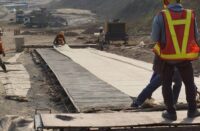
Curing: Because of its low w/cm and large exposed surface area, pervious concrete requires aggressive curing techniques. NRMCA recommends that pervious concrete be misted and then covered with plastic sheets within 20 minutes of placement. This small window of opportunity limits the amount of finishing work that can be done, although it is possible that some types of stamping can be done after the plastic is placed. Edges of the plastic should be held in place with dirt or lumber to contain moisture. The plastic should remain in place for not less than seven days.

Contact between the concrete and plastic can cause uneven coloration of the concrete. If this discoloration is not acceptable in a pervious project, consider a method of tenting the pavement so the plastic does not come in direct contact with the concrete.

Coloring with stains
Cured pervious concrete can be stained. Bear in mind, however, that it will be difficult to apply stain to all exposed surfaces within the pores of the concrete. In addition, liquid-based stains may drain away from the surface before they have had sufficient contact time to impart coloring. Stains only color the surface of the concrete, so any raveling would expose unstained concrete. With this in mind, stains are best used in conjunction with integrally colored concrete; the stains can create accent panels or borders, for example, while the integral color provides shading throughout the depth of the concrete.

Stains produce an inherently mottled appearance, even on regular concrete. This effect may be even more pronounced when applied to the already variegated surface of pervious concrete. Since there is limited experience in the industry staining pervious pavement, trial applications and mock-ups are highly recommended before proceeding with a project.

Pervious Concrete

Other design options
Pervious pavement can be combined with conventional concrete pavement to create visual interest. For example, broomed colored concrete borders can be used around panels of pervious paving in a complementary color.

Spray-applied sealers can be used to create a gloss surface. Care must be used to assure that the sealer does not clog pores.

Slightly grinding the surface of cured pervious pavements removes prominences to reduce the roughness of the concrete for improved walking comfort and less road noise. The depth of the grinding and the color of the aggregate have an effect on the pavement's appearance.

Select aggregates can be broadcast onto the surface of the pavement after screeding and then tamped into the surface during compaction to create exposed aggregate finishes.

Where the concrete is not intended for pedestrian use — as erosion protection on the embankment of a stream, for example — the compacted surface can be raked or otherwise roughened to create a deliberately rustic surface.

Pervious ConcreteLook, then leap
Maintaining consistency of pervious concrete from batch-to-batch (and even from the beginning of a batch placement to its end) can be challenging whether it is colored or uncolored. While a cardinal rule of conventional colored concrete is to avoid adding water to a mixture at the job site, it may be necessary to violate this precept in order to maintain the correct consistency of pervious concrete. With a dry mixture and large surface area, pervious concrete is prone to inconsistent evaporation due to workmanship, sunlight and wind. When either of these scenarios occurs, even small changes in w/cm will alter pavement appearance. Add to this the discoloration that can occur due to contact between concrete and plastic sheets during curing, plus the raveling that occurs on even the best pervious concrete projects, and it should come as no surprise that pervious pavement does not always look “pretty.”

Still, it can be beautiful when accepted on its own terms and integrated into an overall project design. At the recently remodeled entry to the University of California's botanical garden, for example, the designer wanted a natural-looking pervious material for walkways, and proposed crushed rock. When the University's facility department expressed concern about crushed rock damaging floors if it was tracked into adjacent buildings, the landscape architect turned to the similarly rustic appeal of colored pervious concrete. At another recent project, colored pervious pavement was used for the parking lot near a beach. The owner readily accepted the variations in pavement appearance by saying they were reminiscent of the beach itself.

Customer expectations, however, must be managed. Customers should be shown other projects with representative workmanship and realistic tolerances must be established. Final color selection should be made, whenever possible, from samples made with the actual materials proposed for a project. Mock-ups or field samples should be constructed before proceeding with large or complex projects so a clear standard of performance can be established.

Until recently, pervious pavement has been used primarily in parking lots. With growing demand for pervious pavement in residential and smaller-scale projects, decorative concrete contractors will find that their attention to detail and willingness to learn new techniques makes them well prepared to take advantage of the new opportunities. Pervious concrete is still a young art form, and new products and techniques are likely to expand its palette of decorative options. In this creative environment, providing consumers with their choice of colors will help them embrace pervious pavement as an attractive way to protect the natural environment.

Nick Paris is vice president for marketing at Davis Colors, a leading producer of concrete colorants, and the author of numerous papers on concrete coloring. He can be reached at www.daviscolors.com.

Michael Chusid, FCSI is an architect specializing in building technology and building product marketing. He is a member of ACI Committee 124 — Concrete Aesthetics. He can be reached at www.chusid.com.

previous ›››
 
This Issue
Concrete Decor, Vol. 5, No. 6
December/January 2006
Concrete Decor, Vol 5, No 5


Stay informed!
Enter your e-mail address
and subscribe to the
Concrete Decor Newsletter.


Other articles in this issue:
Brush up on Brushed Finishes
Stenciling Existing Concrete
Slip Resistance
Cold Weather Stamping
Opaque Coatings
Decorative Concrete Panels
Vertical Stamped Tiles
Artisan in Concrete: Seamless Floor Coatings
New Technology: Pervious Concrete
Manufacturer Profile: Arch-Crete
Tooling: Decorative Forms
Project Profile
Product Profiles
Product News
Final Pour
Concrete Industry News
Concrete Association News
Decorative Concrete Tip


Home  |   Departments  |   Archives  |   Digital Issues  |   Blogs  |   Products  |   Training  |   Videos  |   Bookstore  |   Links  |   Glossary

©2012 Concrete Decor Magazine. Unauthorized reproduction of any information on this site is a violation of existing copyright laws. All rights reserved.