
 Epoxy-aggregate. A simple descriptive phrase for a category of decorative toppings that is anything but simple. As floor systems go, they offer a variety of aesthetically appealing and durable surfaces that are hard to beat. If you’ve not worked with these products before, this mini-tour may pique your interest.
Generally, epoxy-aggregate systems fall into two broad categories: porous and nonporous — also called “open” and “closed” systems. The porous systems use epoxy-pebble mortar. The nonporous systems include terrazzo systems, troweled epoxy mortars and broadcast epoxy systems.
As with any decorative topping installation, substrate preparation is the most important step. The substrate should be thoroughly prepared according to specific system directions provided by the manufacturer. Also, expansion joints must be honored and active cracks repaired.
Epoxy-pebble systems
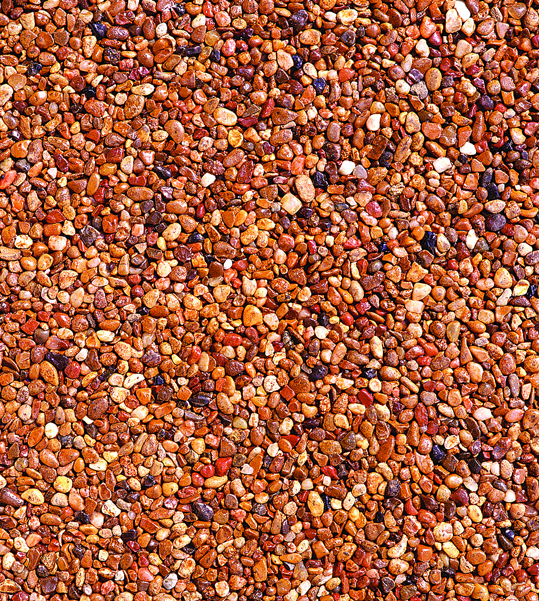
Contractors agree porous epoxy-pebble systems are the least complicated and have many benefits, including hiding puddles and hiding imperfections in the substrate. The variety of pebble sizes and colors available makes these systems aesthetically pleasing, and it is fairly easy to incorporate borders and designs.
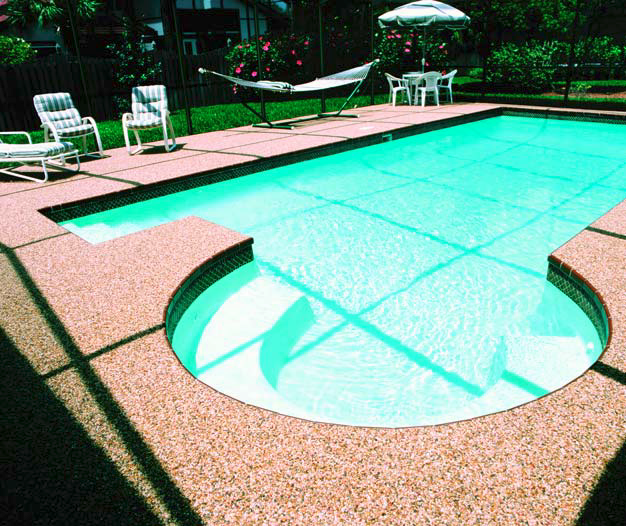
 Epoxy-pebble systems are most often used for outdoor applications, such as driveways, pool decks, patios and walkways, but are good for indoors, too. Smaller pebble sizes of 1⁄8 to 1⁄4-inch are easier on bare feet. Larger pebble sizes increase the porosity and texture of the surface.
Typically, the epoxy is mixed in a mixer, and then the pebble aggregate is added and mixed until it is well coated and evenly distributed. The mortar is then transferred to the substrate. David McKinnon, vice president of sales for Seamco Labs Inc. in Tampa, Fla., explains the importance of troweling right away: “The excess epoxy runs through the rock into the concrete slab. If you [leave the aggregate in a pile], the epoxy drains through at the pile” and you won’t h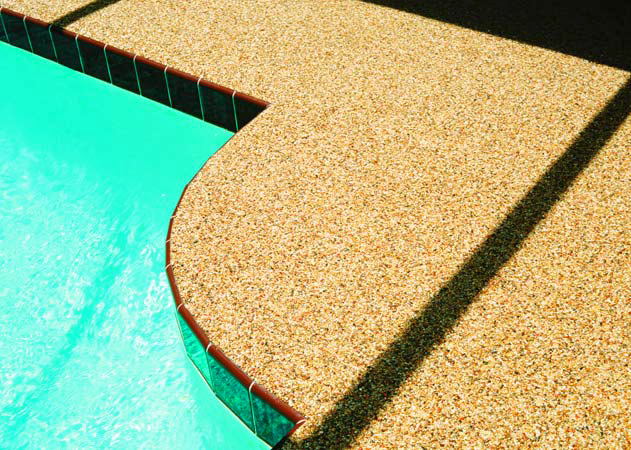 ave good adhesion elsewhere when the material is eventually spread.
McKinnon says you can trowel these systems as thin as 1⁄4-inch to as thick as two to three inches to level a surface, but “the rule of thumb is to install the topping three stones thick to get the proper hiding power and run through on the slab.”
Paul Koury, president of Life Deck Specialty Coatings in San Diego, reports these systems have “quick turn-around — with very little downtime.” To aid troweling, he recommends installers continually wipe their trowel with a solvent to avoid buildup.
 The No. 1 negative of these systems is the ambering and degradation of the epoxy in ultraviolet light. Regular maintenance is a must!
Boyan Radovanovic, president of Aggregate Protective Coatings Inc. in Torrance, Calif., explains, “If you don’t maintain it, you’ll have problems. The pebbles delaminate and completely fail from one another.”
How often you reseal depends on the amount of UV exposure, but typically the decorative system should be 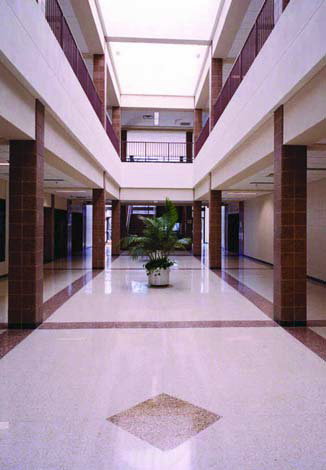 recoated every 12 to 15 months if it’s in the sun, less frequently if it’s in the shade or indoors.
Terrazzo systems
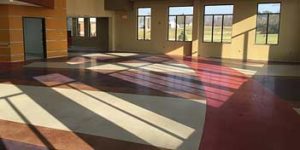
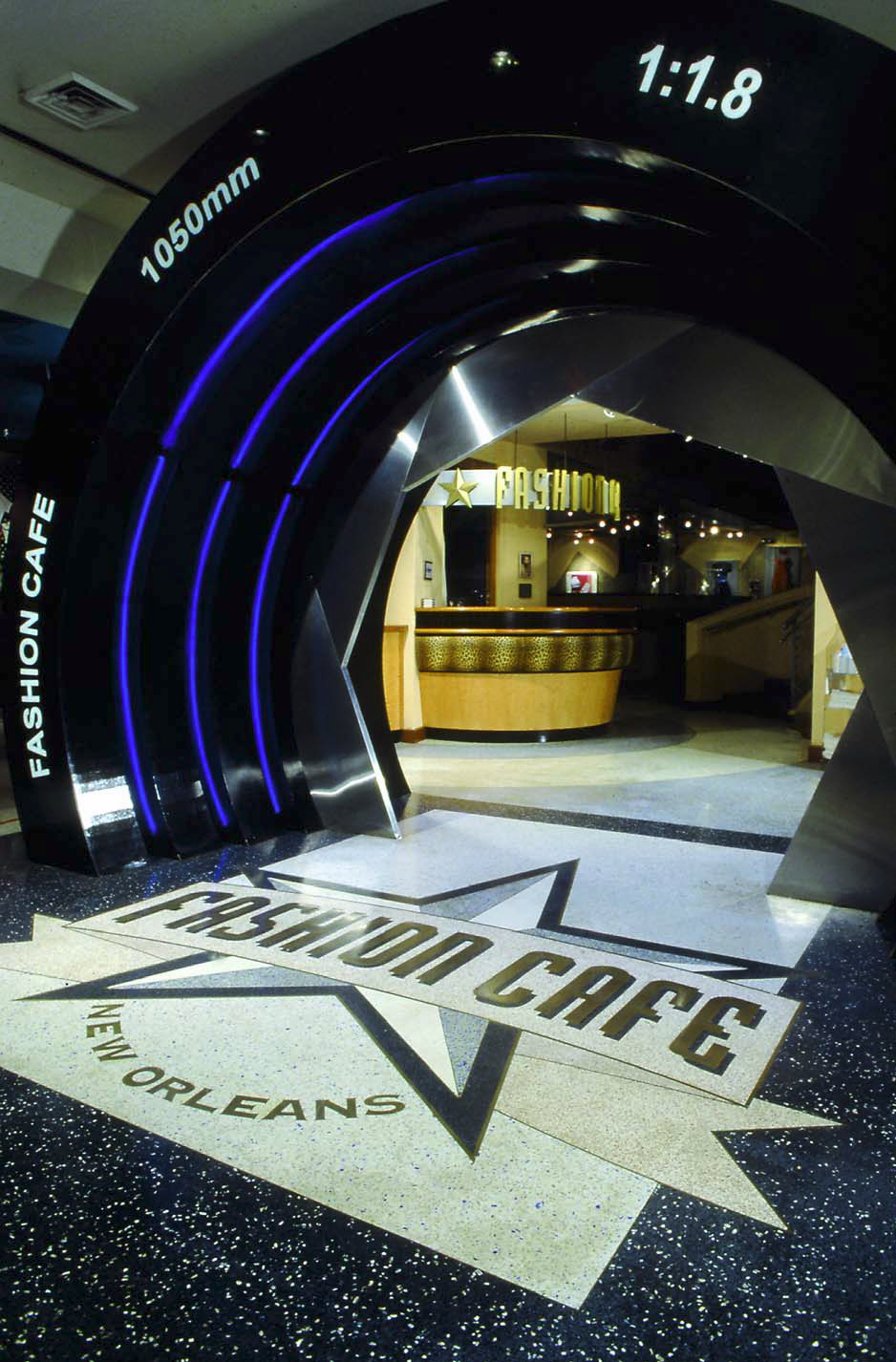
 “Epoxy-terrazzo is the most popular hard-surface flooring today … in commercial settings. It has the lowest life-cycle cost of any hard surface material,” exclaims Robert Cain, president of Key Resin Co. in Cincinnati. You see it frequently in airports, arenas, sports complexes, train stations, universities, schools and hospitals.
Lifetime floors, you might call them. “They are expensive, but extremely long lasting,” Radovanovic says. The expense comes in because “they are labor intensive and require significant downtime in an area.”
 The aggregate most frequently used in terrazzo systems is marble, reports Tom Murphy, vice president of marketing for Sherwin-Williams Co.’s General Polymers in Cincinnati. Because the surface of the mortar is always ground to expose the inside of the aggregate, the size of the aggregate is important in achieving certain surface appearances.
The installation process is lengthy. After preparing the substrate and applying a primer, zinc, aluminum or brass strips are placed in the desired pattern. What you have is kind of a paint-by-numbers grid. “You mix [and apply] one color at a time in panels that are not touching. You don’t want color bleed-over from panel to panel,” Murphy explains.
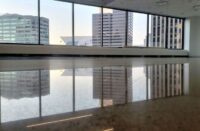
The rough grind is next, exposing the marble and the strips. Air pockets opened in this process are grouted with the same color epoxy used in the mortar mix. Then the surface is polished to take off the excess grout and smooth out other inconsistencies. Murphy points out, “The art in terrazzo installation is in the grinding — that’s what people see.”
Finally, a penetrating sealer closes up the stones and brings out the color.
Basic maintenance is to remove dirt with a dry mop. Terrazzo naturally develops a dull patina, but where a shiny look is desirable, regular application of an acrylic sealer and buffing may be required.
Troweled epoxy mortars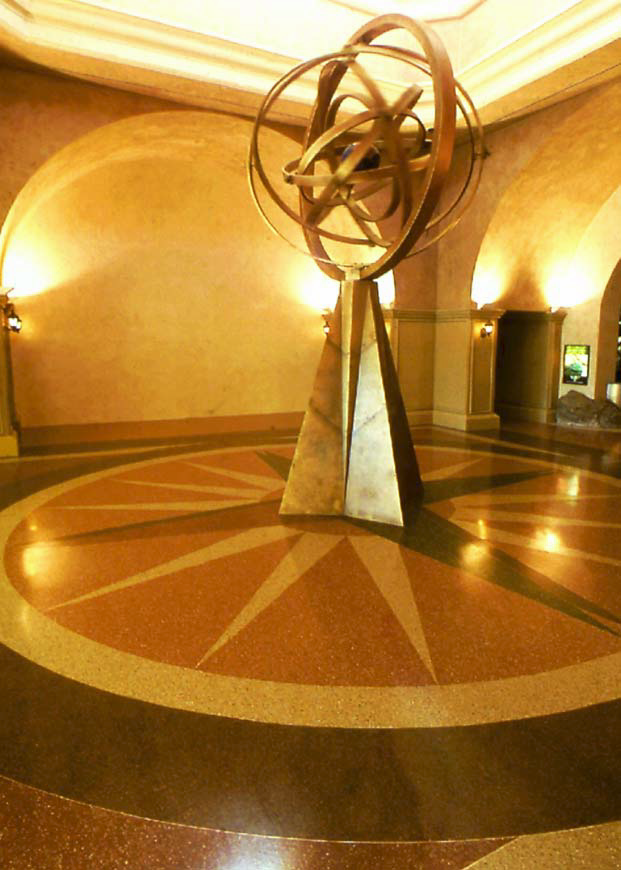
These seamless systems work well in lobbies, hallways, kitchen areas, showrooms and similar environments. There are two basic variations: clear resin with colored aggregate or pigmented epoxy with aggregate.
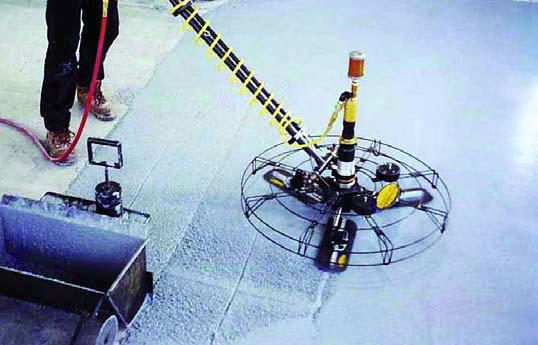
To install, the prepared substrate is primed and the mortar troweled to the desired thickness — usually 3⁄16 to 1⁄4 of an inch. Troweling can be done by hand or by machine. Hand troweling can be tricky and heavy power trowels need a drier mortar to support their weight (and can leave swirl and chatter marks), so a lightweight power trowel might be considered. The surface gets a light sanding to take off imperfections, but not enough to take the color off the aggregate. Leveling is done by trowel, not grinding, in these systems. An epoxy grout coat fills any voids and a topcoat — frequently a urethane — is applied as a sealer.
Howard Sinclair, vice president of sales at Rez Solutions L.L.C. in Lakewood, N.J., says these systems can be “functional or decorative” and are usually low maintenance. “The standard recommendation is to sweep daily and mop with a mild detergent. No resealing is required, except in extreme wear conditions.”
Broadcast systems
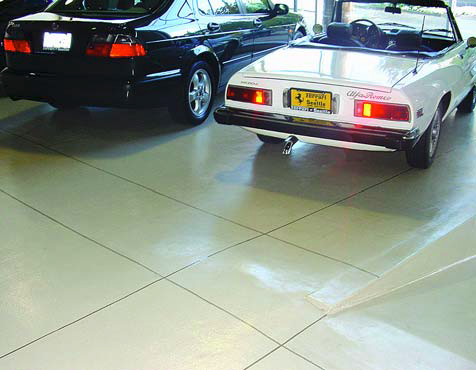
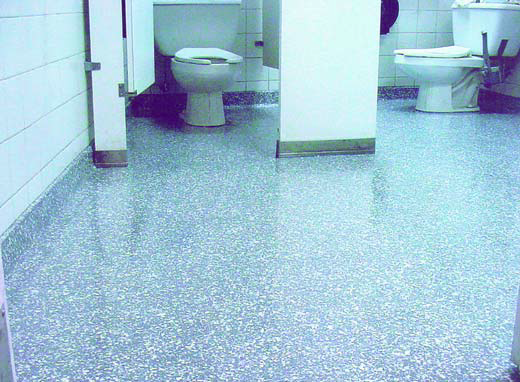
The use of these seamless systems is frequent in industrial and commercial applications, such as research labs, locker rooms and restrooms, but is growing in residential applications, particularly garages.
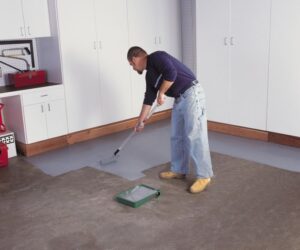
To install, the prepared substrate is primed and a base coat of epoxy is rolled on. While the epoxy is wet, the aggregate — typically fine quartz — is broadcast to full saturation and allowed to bond over night. Excess aggregate is then cleaned away, and another coat of epoxy and aggregate is applied. Sinclair explains, “Each broadcast gives you about 1⁄16 of an inch. You reapply multiple times to build up to the desired thickness.”
Gwynn Stegen, chief operations officer for Excellent Coatings Inc. in Vista, Calif., cautions that broadcast systems “will telegraph imperfections in the substrate. The system you put on is only as good as the substrate you put it on.” But she says these systems are a very creative medium to use. “You can do borders, logos, checkerboard patterns and [you can use] different colors, resins and aggregate. You have the flexibility to let your imagination go wild; limited only by budget.”
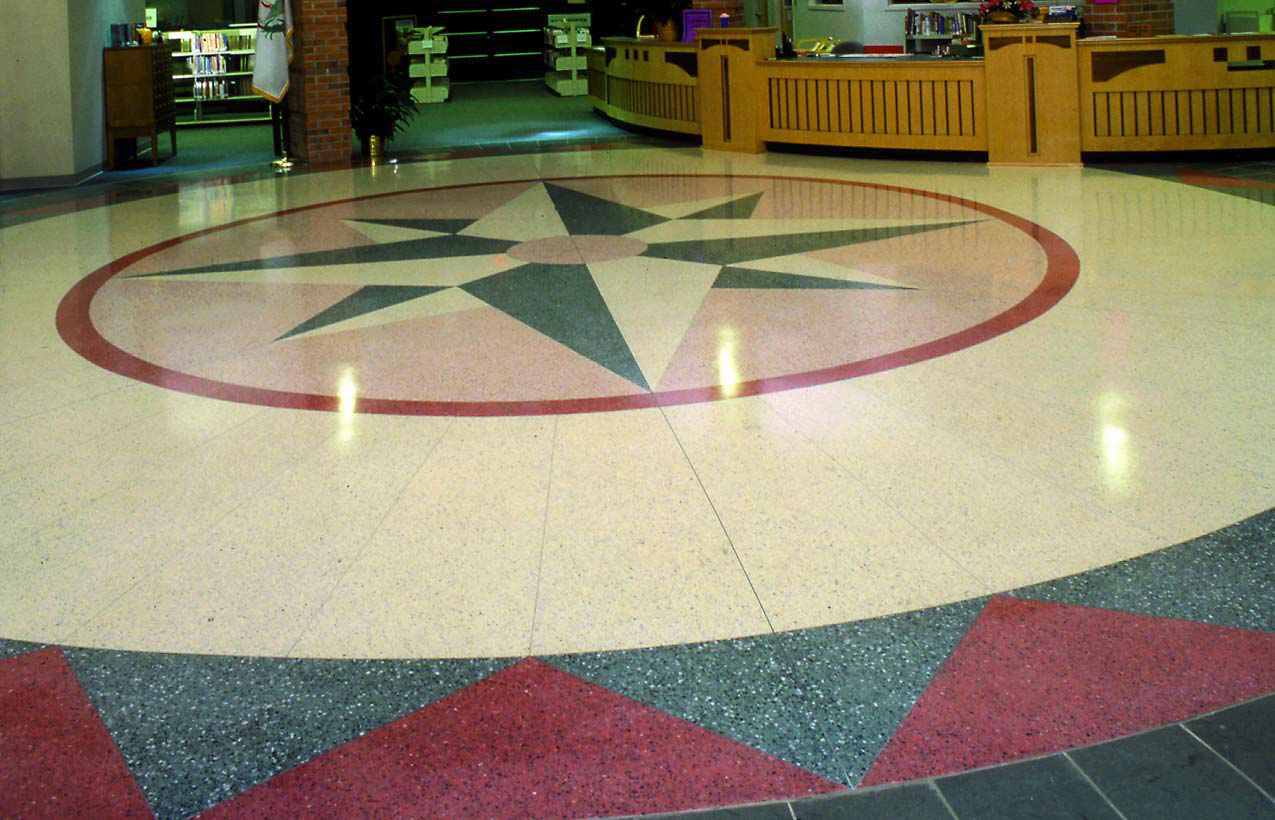 The last step is the sealer. Grout with epoxy to flatten the surface or use a different topcoat, such as urethane, to help maintain the surface profile, advises Murphy. Decide on the skid-resistance desired and have your customer agree to this before the project starts. Do sample boards with different topcoats.
Cleaning is a simple affair, only complicated by the amount of texture. Resealing is generally not needed unless there is heavy traffic.
How do they stack up?
Installation prices vary around the country, but McKinnon estimates that epoxy-pebble systems can run from $3.50 to $14 a square foot. Koury strongly advises that contractors base their warranty on reliable maintenance to avoid problems caused by sunlight.
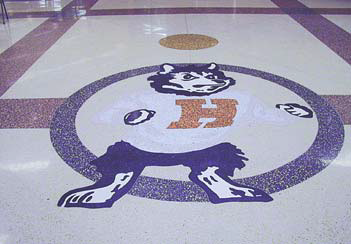 Of the systems which are used mostly on interiors, terrazzo is the most expensive up front, which can cause sticker shock. Murphy recommends having a basic price for simple floors and pricing out logos and detailed patterns separately.
Troweled epoxy mortar systems fall in line next, followed by broadcast systems, which are comparable in cost to other decorative finishes such as stamped toppings, according to Stegen.
While there is growing demand for epoxy-aggregate systems, there is a learning curve. If you’re interested, talk to experienced contractors. Most system manufacturers offer training, too. And start with small jobs. Cain observes, “These things are in high demand, but it takes a specialty contractor to do a good job.”