


As many of you know, I hold a master’s degree in painting. During my college years, I learned a lot about the pigments used to create all the beautiful colors in each of my paintings. When I began my career in decorative concrete, I had to start all over with learning new materials. I quickly found out that pigments are extremely important to both my painting and contracting careers.
In the early days
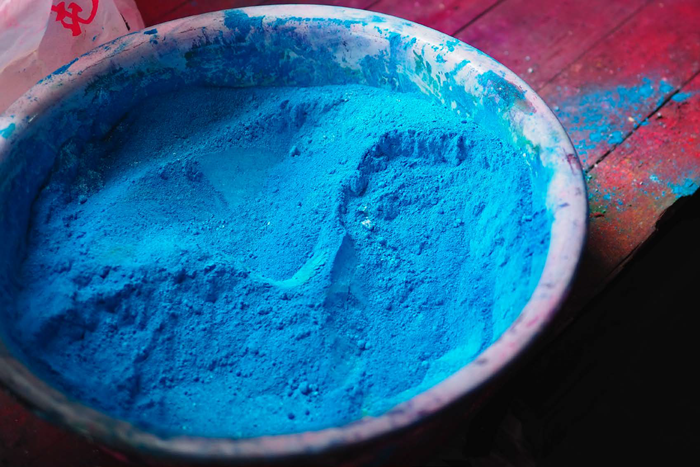
The first true record we have of people grinding pigments to use to color with was during the prehistoric age. Back then, people combined ochre, a natural pigment in clay, and charcoal with other earth-toned rocks and crushed them down. They used these pigments in caves that date back 20,000 years.
The Egyptians led the way with synthetic pigments. They were the first to concoct a blue from a mixture of sand, lime, and copper. The Chinese developed vermillion, a vibrant red-orange, and used it in their art long before Europeans incorporated it into theirs.
During the Renaissance, artists began to grind more unique colors and add them to oil. Consequently, oil produced a wider palette of longer-lasting color choices, such as ultramarine blue, derived from lapis lazuli.
When I take people on art museum tours, I like to point out how artists used small amounts of bright blue and fiery red during those times. This is because these colors were very difficult to come by, and it was tedious to make your own personal paints.
The Industrial Revolution
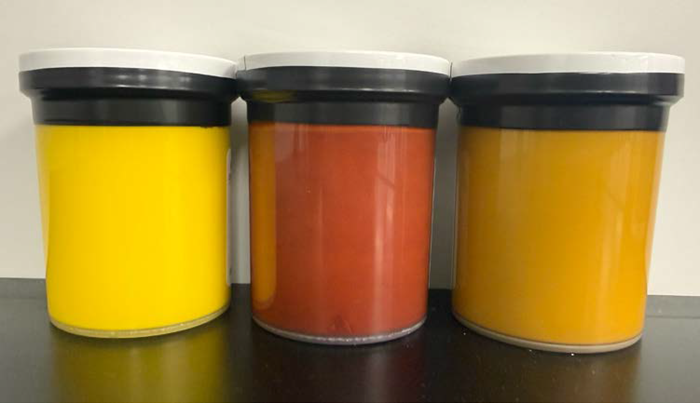
Significant changes in pigment production didn’t happen until the Industrial Revolution. Thanks to mechanical advancements, artists no longer need to search for each pigment and painstakingly grind their own to make paint. Now we can purchase Prussian blue, cadmium yellow, and many more vibrant colors that are more affordable and accessible.
Harvard is home to the Forbes Pigment Collection, which holds more than 2,700 pigments used in artwork all over the world. The collection is not open to the public because many of the pigments are extremely toxic.
It is a dream of mine to one day study many of those pigments and see how far down the rabbit hole I can go. For example, they make one specific pigment out of dried-out urine from cows that only eat mango leaves. Imagine the process used to make that pigment.
In the 1920s, contractors used iron oxide pigments for color in concrete.

Today’s concrete staining
All this history lays out the foundation for precursors of concrete staining. The modern history of concrete staining began in the mid-20th century, with builders and artists discovering that acid-based chemicals could react with minerals in hardened concrete, producing permanent, variegated colors.
By the 1970s, decorative concrete gained traction in commercial spaces such as hotels, restaurants, and retail stores, where businesses wanted durable floors that also made a visual statement.
Today there is almost no limit to the colors we can use in and on concrete. We are spoiled by the fact that we can go into many ready-mix plants and just order pigment and have it added to the mix design. From water-based to some of the most toxic pigments out there, we are surrounded by more ways to stain the surface of concrete than society could have ever imagined.
So where are we now with pigments? Well, we grind mica flakes into fine powder and combine it with epoxy to achieve an array of colors.
It’s a little overwhelming to think that pigments were first used for cave painting and Egyptian temples. People had to manufacture their own pigmented paint in quite complicated ways.
Today, we can add pigments to 100% solid epoxy and make amazing marble-like floors. I’m sure glad I’m living in this day and age with all the access I could ever need to any pigment I could ever imagine.