
The community of Plymouth, Wisconsin, is getting its beloved ski hill back after being shuttered for the last decade due to rising costs. Brought back to life by a nonprofit group — the Cheese Capital Winter Park — the community and board members officially reopened the doors at Nutt Hill Winter Park this season.
The park features six tubing lanes, two ski/snowboard runs, a chalet and an office building with equipment storage.
With the buildings needing a facelift, one of the members of Cheese Capital reached out to fellow community member LeRoy Braatz, technical service manager for Torginol, to see if the chip manufacturer would be willing to donate to the project. The member was already familiar with epoxy flake floors as he had them installed in his own garage, and he wanted to incorporate the look into the Nutt Hill buildings.
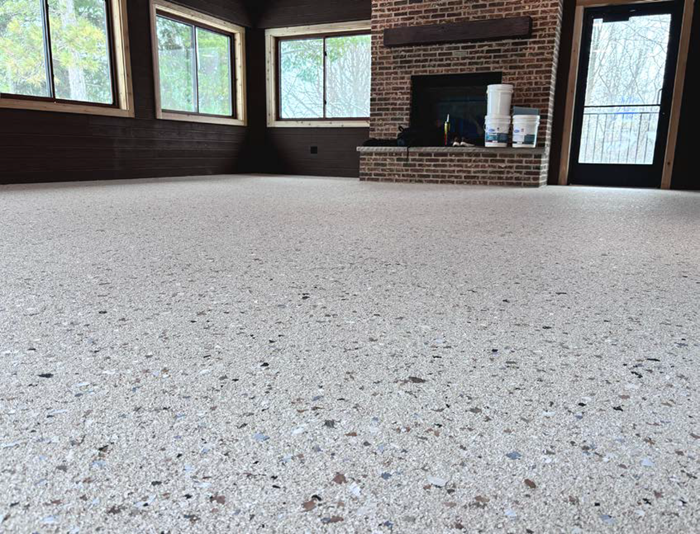
Torginol has been a pioneer in the resinous performance flooring market in the United States, focusing on engineering decorative flooring materials to enhance everyday spaces. Now, that list of spaces includes Nutt Hill Winter Park.
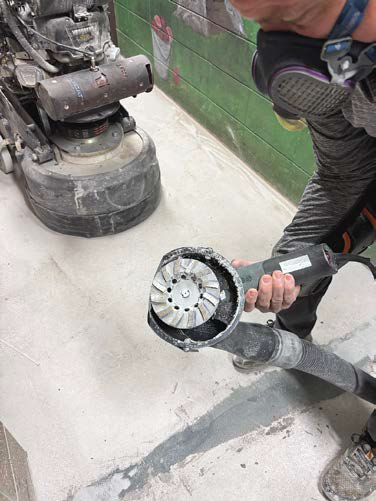
Choosing the right diamond
It started out as a small vision but quickly turned into a much larger project after Torginol teamed up with Resinwerks and Milwaukee-based contractor Miles Dornbrook and his crew from Dornbrook Custom Coatings. They volunteered to make the space truly special.
There was no time to spare to get the project done. There were just two weeks until the ski hill’s grand reopening.
Dornbrook took on most of the necessary surface preparation. The floors needed grinding and patching before any coatings could be laid. Because of the concrete’s differing ages in each of the buildings, Dornbrook had to grind each one differently.
“For the Chalet, the concrete was older and softer so we used a hard-bond diamond so that the metal surrounding the diamonds doesn’t wear away as fast and expose the diamonds as often,” he says.
“In the second building the concrete was only a couple of months old and has been machine troweled so it was really smooth and hard. We used a soft-bond diamond so the metal would wear away faster and expose the diamonds more.”
Dealing with a fast turnaround
From there, each space was treated similarly. The crew filled saw cuts and cracks with Kinetic Patch system, a two-part polyurethane system from Resinwerks designed for projects like Nutt Hill that need a fast turnaround.
 |
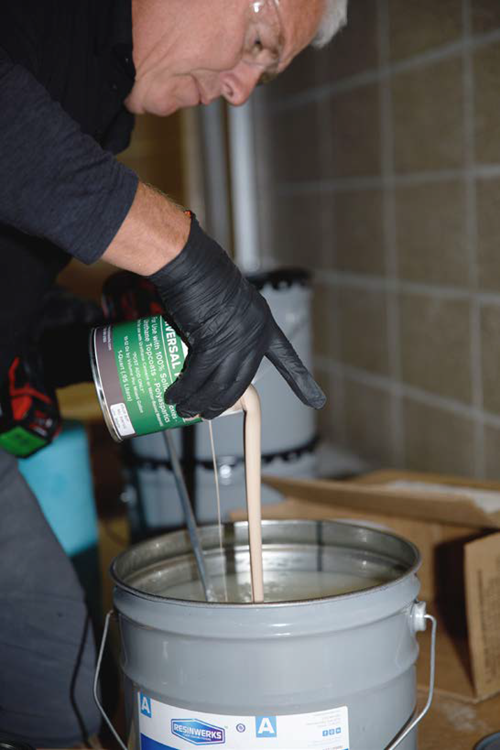 |
“The floor was a little cool so it took a little longer, but we were still on it in 20 minutes with a grinder,” says Jeff Klepser, director of training at Resinwerks. The U.S.-based manufacturer provided all the coatings for the project. Resinwerks offers high-performance resinous flooring systems, including epoxy, polyaspartic, urethane cement and decorative solutions.
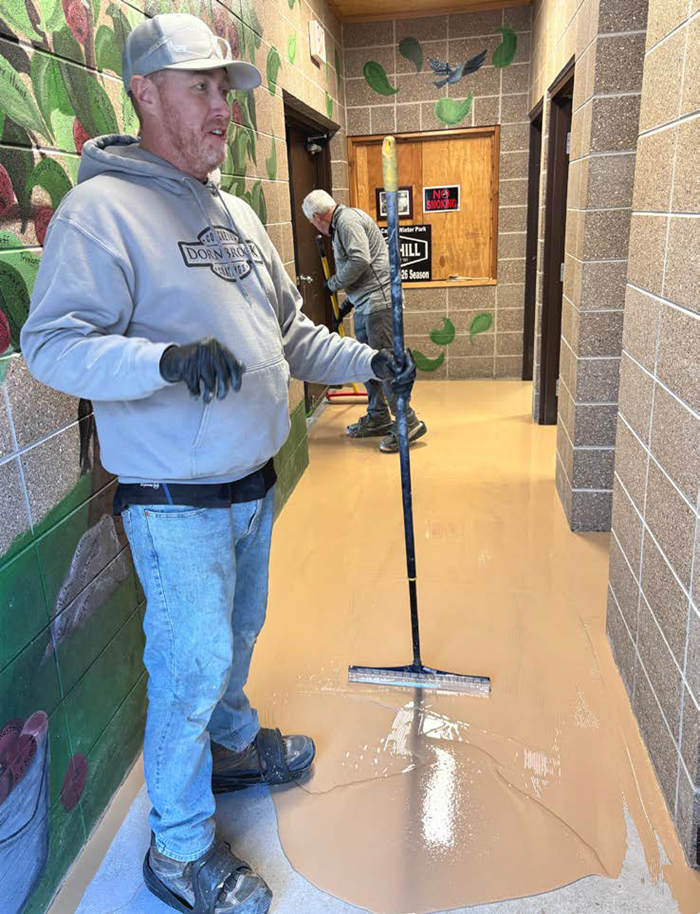
After vacuuming up everything, it was time to lay the epoxy. The team opted for Resinwerks’ Vapor Barrier Epoxy. They applied it at a rate of about 120 square feet per gallon, giving the crew a base coat that was roughly 10-15 mils thick.
Selecting the flakes
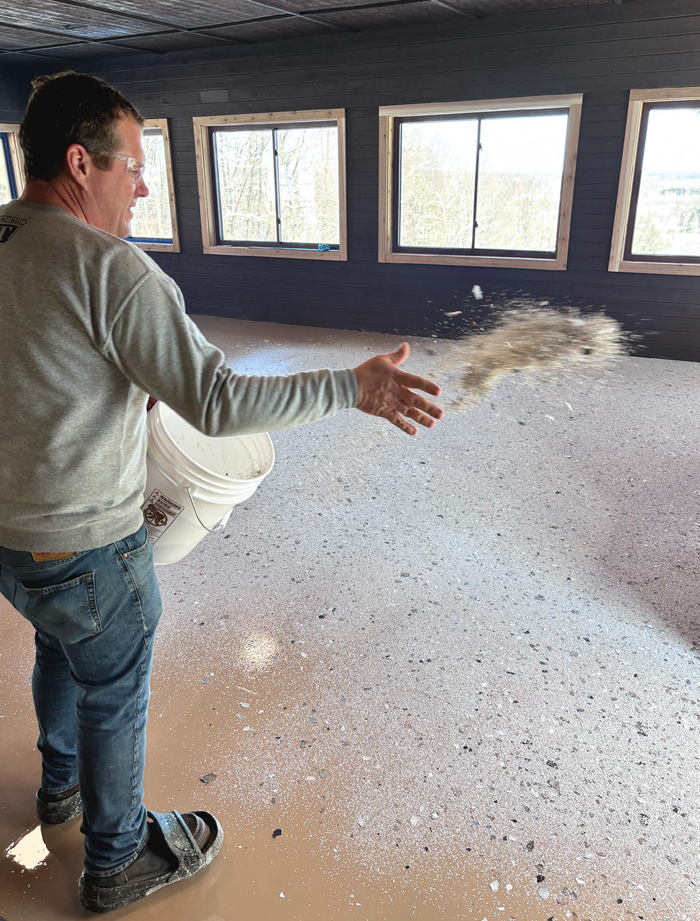
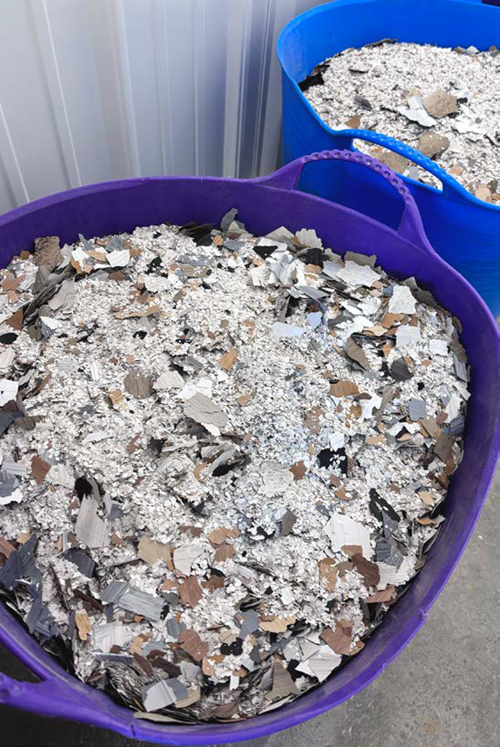
For the flakes, the team applied Torginol’s newest product innovation – Mosaic Hybrid Flake, a flake mix containing both 1/8-inch and 1-inch sizes. Torginol developed it after receiving many inquiries from contractors wanting to offer something different from their competitors.
“It can have a more rustic stone look and also a more vibrant terrazzo look,” Braatz says. “It’s a different look than a traditional flake. I think the hybrid flake could end up being a really good opportunity for bringing flake into a commercial space.”
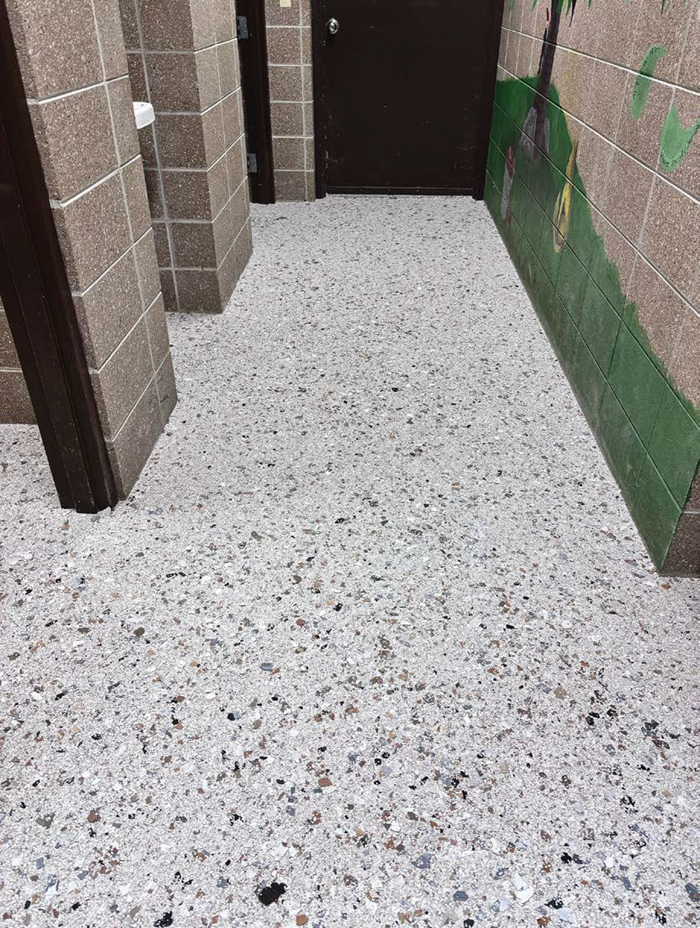
Both Braatz and Dornbrook say the new Mosaic Hybrid Flake applies similarly to a traditional mix.
“You broadcast that on the floor just like any of Torginol’s other sizes,” Dornbrook says. “It doesn’t matter how you throw the flake, you get the same results. Some of the larger flakes break up when you grab them so it looks like you have multiple sizes the way the one inch breaks up.”
Resinwerks’ Kinetic HS, an odor-free 92-percent solids polyaspartic, was then applied as a grout coat over the flake.
Deciding color and texture
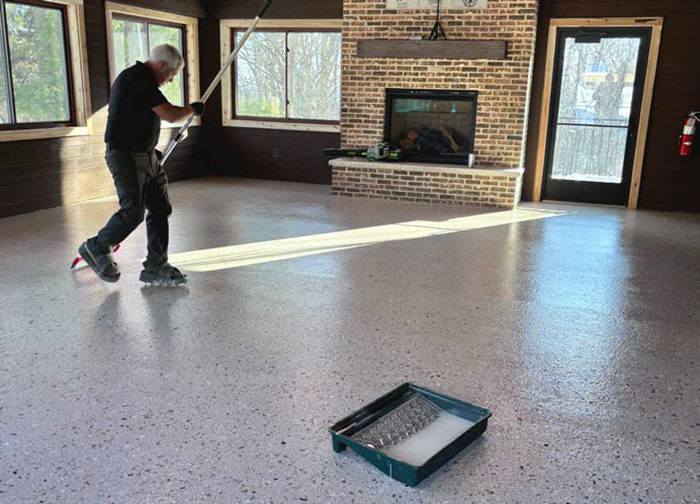
For the topcoat, they decided that a more matte finish would offer the best aesthetic. Using HDC-100, a heavy-duty two-component urethane from Resinwerks, they added more aluminum oxide to get the anticipated results. They also mixed in a 60-mesh traction additive for additional slip resistance.
“We let some of the texture of the flake come through,” Braatz says. “It wasn’t glass smooth. It has kind of a ripply orange-peel finish and the HDC-100 has some aggregate in it so that worked out perfectly. I was walking on it yesterday with wet boots and it has a really nice grip to it.”
While the process was the same for both buildings, a different color scheme for each was chosen to best fit the space.
The chalet building has wooden walls to give it a log cabin vibe, so they opted for the flake blend Ballad, with a Buff color of epoxy. The second building is more modern so they used a whiter blend called Brigantine with an Owl Grey epoxy.
Braatz noted when selecting a color for the epoxy it’s important to use a color dominant in the flake blend.
“Even with a full broadcast you’ll still see the basecoat in spots,” he says. “You want it to blend in with the colors.”
 |
 |
Sprucing up the bathrooms
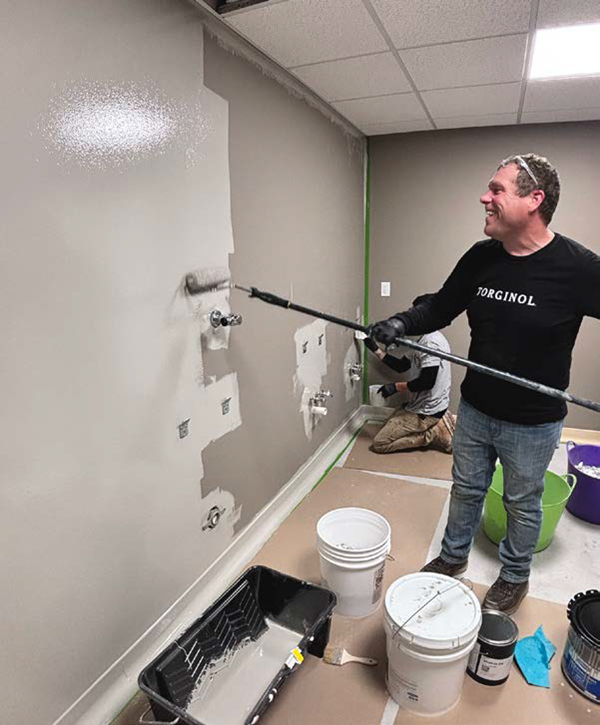
Once the floors were done, it was time to spruce up the bathrooms. The chalet facilities already had an exposed aggregate block wall but they applied a flaked accent wall in the office building bathrooms.
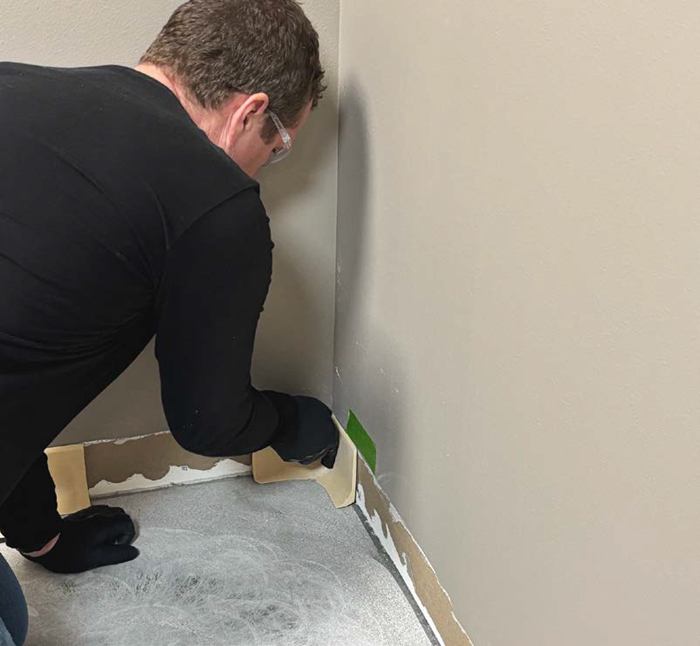
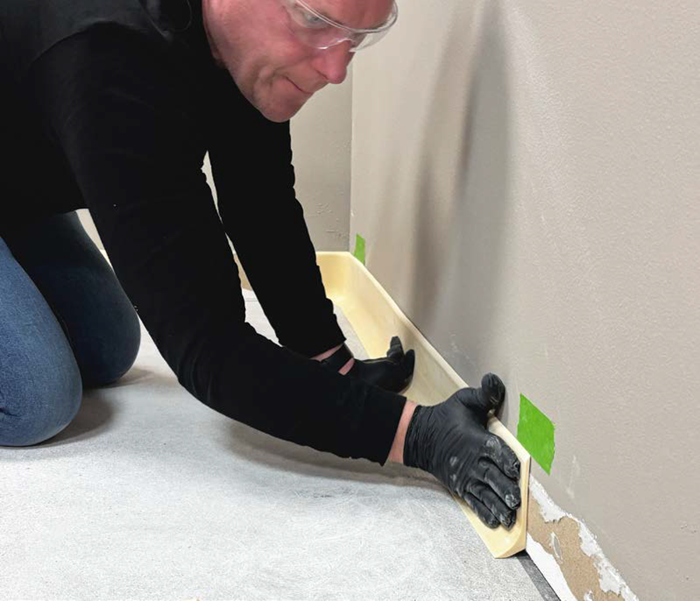
To help with the tight timeline, the crew used 4-inch coves from Speedcove where the floors and walls meet up. The flexible polyester resin composite is used with epoxy and resinous flooring coatings to create a permanent waterproof joint between the wall and floor. The crew attached the cove with an adhesive urethane-based caulk and small screws to pull the trim tight to cure out.
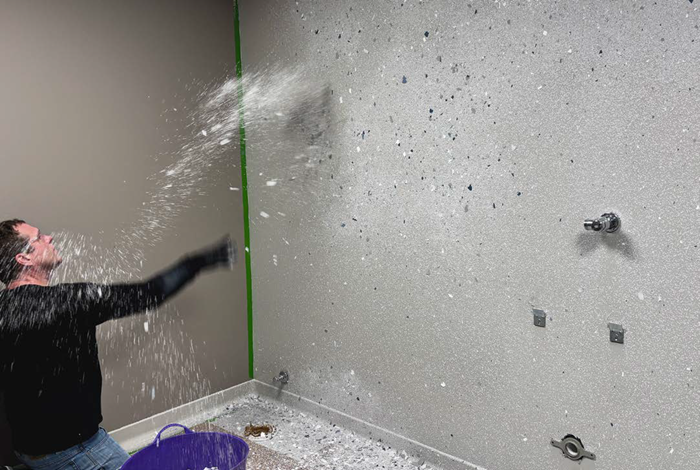
Much like the floors, the crew rolled on Resinwerk’s Vapor Barrier Epoxy at a thickness of approximately 8-12 mils and broadcast the hybrid flakes onto the wall.
“We rolled over the top with a dry roller to push in the flakes. It’s kind of like throwing a leaf – they’re big flakes,” Klepser said.
They applied the same HDC-100 topcoat to the walls, minus the traction additive.
 |
 |
The power of teamwork
In all, the team agrees the project went really well, although they had a couple of small hiccups due to the cold winter temperatures. Additionally, at times it was challenging to keep all the other on-site volunteers out of the workspace.
“We even had one guy accidentally walk across the floor,” Klepser said. “Thankfully the urethane has a long working time so we were able to roll over it. That was a real savior.”
“None of us had ever worked together before, but it couldn’t have gone better,” Braatz says. “We all got along really well and did what we had to do to get the job done. With the power of teamwork, everything went really well.”
Check out the products used in this project
Offered by Concrete Decor Store Kinetic HS - 92% Solids Polyaspartic
by Resinwerks Kinetic Patch - Repair Binder for Concrete
by Resinwerks Vapor Barrier Epoxy - 100% Solids Epoxy Primer
by Resinwerks HDC 100 - Heavy Duty Urethane Topcoat
by Resinwerks


