


Designing decorative concrete is no different from any other process that has endless options. The first step is to ask the questions that define the project and guide the design.
My daughter, home from college for the summer, suggested that the family go out for dinner. The kids and I piled into the car. As I pulled away from the curb, I asked, “Where are we going?” I continued driving a block or so waiting for a consensus to direct my course.
 Finally, I pulled the car to the side, put it in park, and worked through the seemingly simple process of getting three teenagers to agree on a place to eat with the typical series of questions: Does everyone have time for full service or are we going for drive-through? What do you want to eat: burgers, barbecue, Mexican, Italian?
With a little discussion, we were able to narrow down the wants and needs to make a decision that ultimately got me back on the road with an agreed destination without endlessly driving in circles.
Designing decorative concrete is no different from any other process that has endless options. The first step is to ask the questions that define the project and guide the design. Examples of the defining questions are:
- What is the property: residential, commercial, industrial, public or private?
- What is its intended use: home, indoor shopping mall, restaurant or public park?
- What type of decorative concrete does the client want: flooring, flatwork, a fountain, countertops, walls?
- Who is the user or target customer: children, women, adults, an exclusive or high-end clientele?
- What kind of traffic will the property support: light residential, heavy outdoor like at a theme park, vehicles?
- What kind of budget does the client have?
- Are there any restrictions: occupied building, time limit, dust control, product compatibility?
- Are there any special considerations: accessibility, water migration (vapor or runoff), acoustics, code restrictions, EPA factors?
- What are the existing design elements, such as colors, shapes, motif and finishes on, in or near the decorative concrete?
- What is the dominant feature, color, or theme that will help guide the design process?
Are all specified systems and products compatible?
The comprehensive design of the property, as well as probative questions like those discussed above, will guide you through the process. The major decisions direct the smaller decisions.
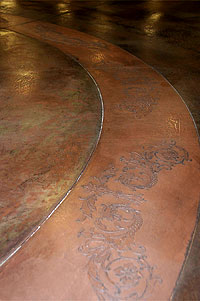 For example, a recent project we completed was at a high-end outdoor-furniture store. They wanted stained concrete floors with tasteful artistry that complimented but did not overwhelm the showroom. Their target customer is middle- to upper-class homeowners. Their budget was about 50 percent above the going rate for stained concrete. The floor is 13,000 square feet of open space.
They selected mid-earth tones for the walls. Knowing that the property is an outdoor furniture store, we recommended penetrating finishes rather than film forming to minimize scratching. We recommended a deep terra cotta as it visually anchored or weighed down the room. Terra cotta is the most popular color among homeowners (the store’s clients) and it nicely complimented the earth-toned walls.
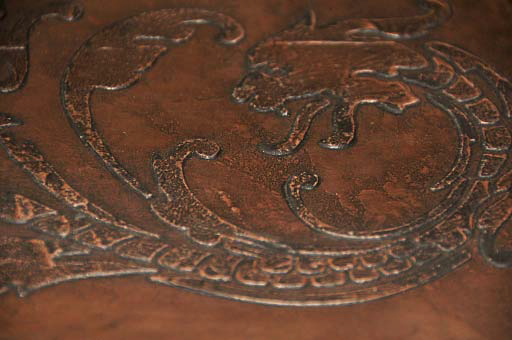
Commercial projects often welcome an “air of excitement.” Strategically placed artistic elements offer occasional interest to the customer. We used stencils to create a stunning antiqued copper medallion in the entry. The decision to antique the piece was based on the business owner’s concern that the floors serve as a backdrop of interest to their merchandise. A shiny copper design at the entry might have commanded attention rather than subtly yielding presence to the merchandise. Much of the detail in the medallion came from the designs of the furniture.
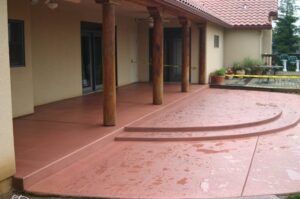
 When selecting the colors for decorative concrete, we look to the structure for direction. What are the colors of the property? Usually there is a dominant color and a secondary color. For example, the exterior of a house or building has a dominant color — the brick or facade. Secondary colors would be the roof color, shutters and trim. The roof or trim is often a darker color. Assigning the secondary color of the roof or trim as the primary color of the flatwork gives continuity, balance and much-needed visual weight to the property.
Shapes and designs usually develop in much the same manner. Square windows, ornamental iron, eyebrow arches, and overall structural style are all points of inspiration.
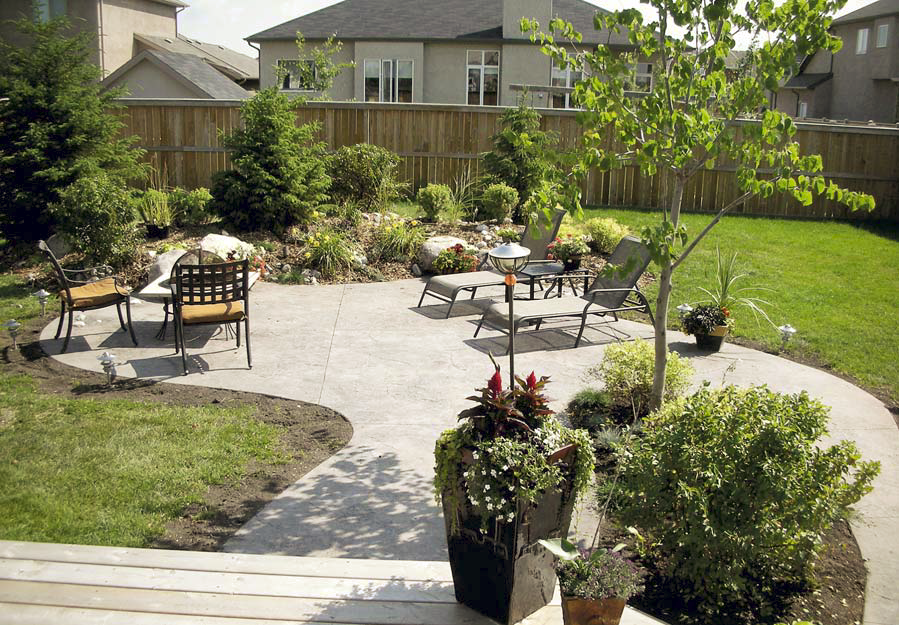
In the end, a well-designed field of decorative concrete, no matter how ornate or simple, should contribute to, but not command, the whole property. The best compliment is when a passerby remarks, “What a beautiful place.”
www.concretestaindesigns.com
www.klassenconcrete.com