Decorative shotcrete is not a physical product. It cannot be touched or held in your hand. Shotcrete is a process or verb. It is the action of placing concrete to achieve high strengths and low permeability.
Shotcrete is defined by the American Concrete Institute’s ACI 506-R-05, “Guide to Shotcrete,” as concrete (or sometimes mortar) conveyed through a hose and pneumatically projected at high velocity onto a receiving surface. While the material component of shotcrete is essentially concrete, the process of shotcrete application is unique. It involves pneumatic projection to achieve compaction on the receiving surface.
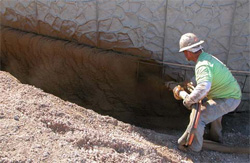 The shotcrete process is prevalent in many industries: pools, underground tunneling, infrastructure and building trades. In fact, products of the shotcrete process are all around us but rarely noticed.
Using this application in a decorative manner combines all the benefits of cast-in-place concrete with higher strength and durability because of the in-place compaction.
Spraying concrete onto a surface at high velocity is, in theory, the perfect concrete placement method. Individual aggregate particles of various sizes, with a cement paste covering, in place to form a void-free mass of fully compact concrete. This strong, dense, material is ideal for most concrete applications, including decorative concrete.
Decorative Shotcrete Products
Examples of shot product that are decorative are numerous. A family vacation in Florida will lead you (especially if you have young kids) to Walt Disney World. The Splash Mountain and Big Thunder Mountain Railroad features are structural concrete from the use of the shotcrete process. Park specifications surely require the decorative concrete to have water-repellant qualities. Porosity issues, permeability and strengths are key issues that impact the long-term durability of the attractions.
Many underground rail tunnels are not only using shotcrete as rock or ground support but also as a finished exterior coating. For a contractor, this process will not only satisfy structural specifications, but also cause a huge cost reduction.
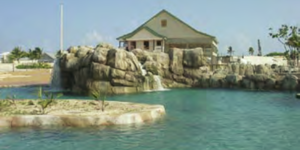
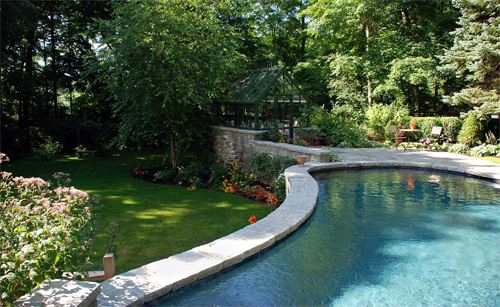
Other applications of decorative concrete through the nozzle include pool creation. Watertight, low-permeability structural materials are essential to the success of the pool industry. One-sided forming with unlimited shape potential makes shotcrete a perfect material for pools.
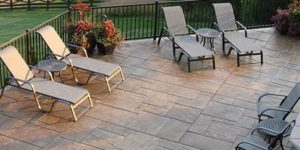
In addition, home construction projects, renovations and commercial installations can all take advantage of the shotcrete process for retaining walls, faux rock, decking or high-rise facades.
Shotcrete is probably the best way to install concrete that is not only structurally superior but limitless in shape, size and use. As specifications demand more and more performance from decorative concrete, shotcrete will continue to get looks.