

Why the Smallest Choices Shape the Biggest Results
At first glance, aggregates seem like background players in a concrete mix, just sand, stone, and gravel filling space. But to those who’ve spent their careers in decorative and architectural concrete, the truth is clear: aggregates are not filler. They are the backbone of durability, the canvas of aesthetics, and, too often, the hidden culprit behind surface failures.

Concrete is 70 to 80 percent aggregate by volume. That means every decision about type, size, shape, and exposure influences not only how a slab performs, but how it looks, feels, and ages under real-world conditions. Ignore them, and you invite problems. Understand them, and you unlock some of the most versatile and sustainable design tools in the industry.

More Than Rock and Sand
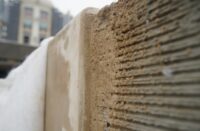
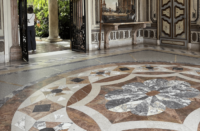
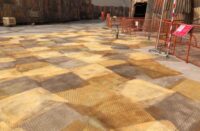
Aggregates come in endless varieties: rounded river pebbles, angular stones, recycled glass, natural shells, manufactured composites, and even metals. Each brings its own unique durability, performance and aesthetic properties.
 |
 |
Strength & Stability
Coarse dense stone aggregates reinforce dimensional stability, while properly graded fines improve workability and finishability.
Aesthetics & Design
The expansive pallet of aggregates, combined with endless variations of sizes and shapes, provide designers options for texture, sheen, and color.
 |
 |
Sustainability & Ecology
Locally sourced aggregates can reduce transport costs and lower carbon impact, while recycled materials help close industrial waste streams.
The methodology for exposing aggregates is as important as the aggregates’ selection. The usage of chemicals and machinery, combined with the depth of exposure not only changes the entire personality of a surface but influences the overall cost and sustainability of the system.
 |
 |
Light Sand
Creates a soft, subtle texture that feels understated and blends seamlessly into its environment.

Medium Aggregates
Reveals both sands and small stones, creating texture and visual depth.
 |
 |
Heavy Stones
Brings coarse aggregates fully to the surface, producing a rugged, natural finish.
 |
 |
Hand Broadcast & Seeded
Presents random or patterned aggregate coverage, often incorporating decorative or exotic materials for maximum visual impact.
Percentage Coverage
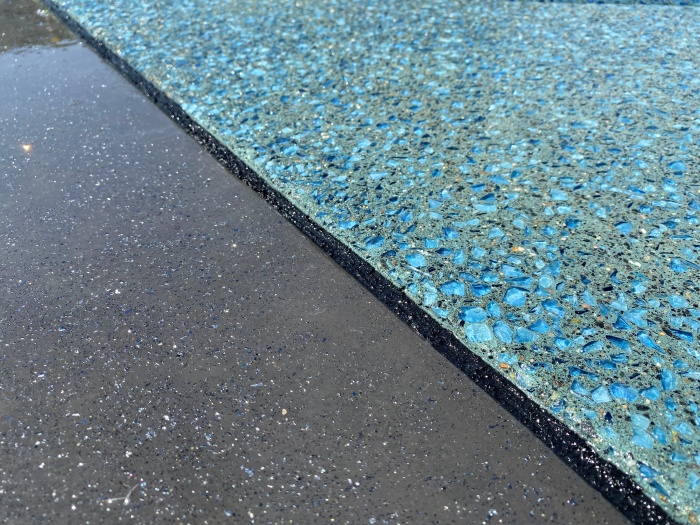
The overall percentage of aggregate exposure matters to the performance and visual aesthetics. A slab that shows only ten percent aggregate will read as smooth and minimalist, while one with fifty percent reveals a more dramatic character, where the aggregates and cement paste share the stage. Complete coverage designs transform a surface from simple to striking, as the aggregates become the dominant element of texture and color.
Coloration Through Aggregates
Color in concrete is often associated with pigments, stains, or surface coatings, but aggregates are an equally powerful tool in shaping final coloration. Exposing aggregates introduces tones that are not present in the paste itself, adding layers of depth, variation, and natural character.
Light sands and quartz can brighten a surface, reflecting more light and softening overall tone. Dark granite or basalt pulls color down, adding contrast and weight. Recycled glass introduces reflective highlights, while shells or slag bring in warmer, organic hues. The interplay of aggregate color with the base paste creates surfaces that shift in tone depending on light, texture, and exposure depth.
Same Paste, Different Aggregates
Two slabs can share the same cement paste, water-to-cement ratio, and pigment, yet look entirely different once aggregates are revealed. A white cement paste paired with river rock produces warm, earth-toned surfaces, while the same paste with crushed granite reads cooler and more contemporary. Even when aggregates remain partially hidden, their underlying color influences how light interacts with the surface, subtly changing how the eye perceives the entire slab.

This reality underscores why aggregate selection cannot be separated from design intent. Choosing aggregates is not simply about strength and availability. It is about how the surface will read visually once installed, cured, and exposed.
Durability, Sustainability, and Environmental Value
When chosen and applied correctly, aggregates are among the most durable and environmentally responsible elements in decorative concrete. Unlike pigments or surface coatings, aggregates are inherently stable. They do not fade in ultraviolet light, they resist abrasion, and they remain locked within the concrete matrix for the life of the structure.
Exposed aggregate finishes take advantage of this stability. By washing away the weaker paste at the surface, the hardest part of the mix is left to carry the wear. This approach not only improves performance but also enhances safety by providing slip resistance in high-traffic environments.
The methodology for aggregate exposure is critical to the overall performance and appearance. Washing and sponging during the plastic state create a gentle reveal with sandpaper like texture. Surface retarders delay hydration at the top surface and allow the natural shapes of the aggregates to be exposed utilizing simple water washing techniques. Post-cure grinding and blasting bring out aggregates in hardened concrete long after the surface has hardened. Diamond grinding produces refined architectural finishes with smooth textures and reflective qualities, while blasting leaves the surface rough and natural. Acid washing adds another option for cured surfaces, chemically etching away the paste to highlight the small sand aggregates. Each method balances appearance with performance, and each requires skill and timing to achieve consistency across a project.

Sustainability of aggregates adds another layer of consideration for designers. Exposed aggregate finishes can reduce long-term maintenance demands, as the stones and sands bear the brunt of traffic. Additionally, regionally sourced stones lowers transportation impacts and utilization of recycled materials can give waste products a second life.
But environmental responsibility does not happen automatically. The greenest choice on paper can become a liability if it is not suited to the climate, exposure conditions, or operational demands of the project.
Cautionary Tales: Pop-Outs, Reactivity, and Failure Risks
Aggregates may look solid and dependable, but when misunderstood, they carry risks that can compromise both beauty and performance.
Pop-Outs
Weak or porous stone can absorb moisture, expand under freeze-thaw cycles, and eventually fracture, leaving blemishes across the surface.

Reactivity
Certain aggregates, such as glass, can trigger alkali-silica reaction, a destructive chemical process that slowly cracks and unravels concrete from the inside.

Surface Scaling
When aggregates are not properly matched to the environment, or when salts and chemicals are left unchecked, scaling can occur and the finish can unravel prematurely.
These outcomes are not random. They are predictable when aggregate properties are ignored. Each failure serves as a reminder that what lies beneath the surface is often what determines whether a project endures or unravels.

“I’ve seen my fair share of failures tied directly to aggregate selection, recycled glass, reactive metal shavings, and porous seashells are some of the worst offenders. One project still haunts me: 150,000 square feet of glass-seeded aggregate failed in under three years. Using recycled glass in concrete, especially in cold climates or where deicing salts are present, is a recipe for disaster. We learned that the hard way at Universal Studios Beijing.” – Matthew Casto
The Informed Path Forward
Aggregates deserve the same level of consideration as admixtures, pigments, or sealers. They are not a background variable. They are an intentional design choice with long-term consequences.
- Test for durability and reactivity before specifying materials.
- Balance aesthetics with function, remembering that what looks good in a mockup must also survive in the field.
- Select the right exposure method, whether wash, retarder, acid, or grind, based on project demands.
- Think long-term and align aggregate choices with climate, maintenance schedules, and traffic realities.
Informed selection does more than prevent failure. It ensures that the surfaces we build today remain strong, sustainable, and beautiful for decades to come.
Project Profiles: Aggregates in Action

Fashion Valley Mall – San Diego’s Luxury Destination Reimagined
When Simon Property Group undertook a multimillion-dollar redevelopment of Fashion Valley Mall in San Diego, aggregates played a starring role in reestablishing the property as a premier luxury shopping and dining destination. The project, the largest since the mall’s vertical expansion in the mid-1990s, included new escalators, bridges, facades, and extensive hardscape renovations.

The design team collaborated from the outset in a Design-Build process alongside the owner, general contractor, and landscape architect to determine the Lithocrete paving types that would bring the design vision to life.
On the ground floor, three finishes were installed:
- Natural gray Lithocrete with a quarried stone finish
- Type 1L cement Lithocrete embedded with fine crushed mirror
- Type 1L cement Lithocrete seeded at 100 percent with 3/8”–½” white marble aggregate

On the second level, four more unique finishes expanded the palette:
- White marble aggregate at 100 percent coverage
- Black aggregate at 80 percent coverage
- Pewter-toned Lithocrete seeded with white marble
- Pewter-toned Lithocrete seeded with black aggregate
In total, more than 42,000 square feet of Lithocrete were poured. These finishes transformed the concourse into a “ribbon-like” sequence of plazas and pedestrian spaces, linking storefronts with bold curvilinear paving patterns that echo the nearby San Diego River.

The logistical hurdles were immense. Crews worked nightly in an operational mall, with ready-mix deliveries starting at 3 a.m. and all work completed by 9 a.m. Each pour required pumping concrete more than 600 feet. Planter walls with battered profiles demanded custom formwork, while the “eye wall” planter required complex layout solutions from limited survey data. Surfaces were stripped, honed, polished, and treated to achieve refined textures.
Ultimately, Fashion Valley demonstrates how aggregate selection and exposure systems can elevate retail hardscapes, making them durable enough for heavy foot traffic yet visually aligned with luxury branding.

University of San Diego – Wellness Center and Plaza
The new Palomar Health Student Wellness Center at the University of San Diego is a three-story, 80,000-square-foot facility designed to integrate physical activity, nutrition, mental health, and belonging. At its core sits the Wellness & Recreation Plaza, a multifunctional outdoor space connecting the center to the rest of campus.

The scope encompassed all site concrete, including the upper plaza and grand staircase. T.B. Penick & Sons, Inc. served as the contractor, working in close collaboration with KTUA (landscape architect), Tucker Sadler (architect), and Rudolph and Sletten (general contractor) to align formwork, finish details, and layout strategies from the project’s earliest stages.
The plaza design reflects USD’s iconic Spanish Renaissance architecture, with symmetry and repeating diamond motifs running the length of the paved space. Warm-toned Lithocrete was chosen to harmonize with campus buildings while ensuring durability.

Technical challenges abounded. Tight schedules after semester finals required compressed completion before students returned. Precision was critical in formwork for 45-degree angles and radiused edges, while saw cutting demanded strict tolerances. The staircase, poured over waterproofing, required a hanging support system and included a double cantilever detail. Each riser was poured individually with the landings placed in a single pour. At the facility’s entrance, the school’s logo was etched and enhanced with a carefully applied reactive stain, blending function with school identity.
The result is a hardscape that both reflects USD’s architectural DNA and performs as a durable, high-traffic space for students, athletes, and the broader campus community.

Aggregates as the Common Thread
What unites Fashion Valley Mall and the USD Wellness Center is the role of aggregates in shaping identity, performance, and long-term resilience. At Fashion Valley, contrasting black and white marble aggregates created a visual ribbon that guides thousands of daily visitors. At USD, warm-toned aggregates tied new construction back to historic architecture while withstanding the wear of student life.
Both projects remind us that aggregates are not a background detail. They are central to how a surface performs, how it ages, and how it tells a story. Whether in luxury retail or higher education, the choices made in aggregate type, percentage, and exposure system directly influence not just the look of a space, but its legacy.
Final Thoughts
Aggregates may be small, but their influence is massive. They dictate strength, sustainability, and longevity just as much as they shape color and texture. Ignore them, and you inherit risk. Respect them, and you gain one of the most enduring tools in the decorative concrete toolbox.
The next time you look at a slab, do not just see the cement paste on top. Look deeper, and you will find the story written in the stone beneath.
Aggregates Available on the Concrete Decor Store
Offered by Concrete Decor Store South American Mixed Beach Pebbles
by Consolidated Aggregates Teal Terrazzo Glass
by American Specialty Glass Lite Spar Aggregate
by Fister Inc


