



It’s Just Color… Right?
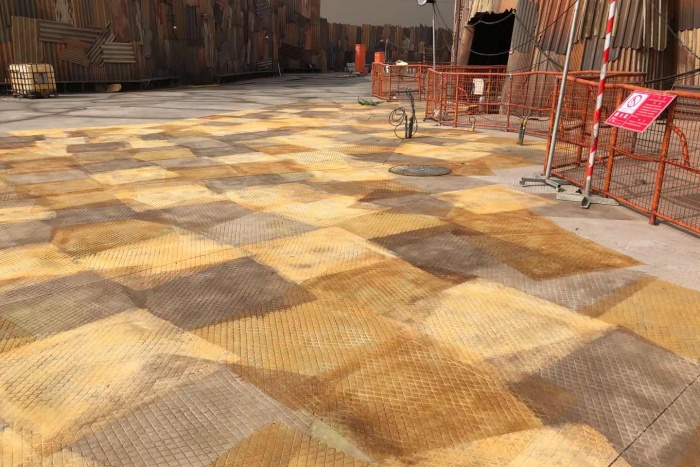
To many clients—and even some specifiers—coloring concrete seems simple. Choose a swatch, pour the mix, and get the color you ordered. But those who work with decorative concrete know better.
Achieving consistent, predictable, and lasting color isn’t just a matter of adding pigment. It’s a delicate balance of chemistry, environmental conditions, surface science, and craft. Despite decades of material innovation, color variation remains one of the most misunderstood and frequently misdiagnosed challenges in decorative concrete.
As Matt Casto, a global art director and specialist in themed environments, puts it: “Concrete doesn’t care how pretty your sample looks.”
The Illusion of Simplicity: Why Color Variation Happens
Coloring concrete is a full-system, complex process, influenced and shaped by variables that span the entire lifecycle of a pour—from raw materials to post-cure care. It’s not just what you mix in—it’s how the surface responds to its environment and how the material interacts with light, moisture, and pressure.
Pre-Placement Challenges
- Cement Source Variability: Cement color can differ subtly between batches or suppliers, especially over long-term projects. These shifts create unexpected changes in pigment appearance, even when dosage remains constant.
- Pigment Type & Dispersion: While inorganic pigments used in integral color are UV-stable and long-lasting, poor dispersion or inconsistent batching can yield blotchy or uneven results.
- Mix Design Changes: Supplementary materials like fly ash or slag influence the final hue by altering the base gray of concrete. Changing proportions, whether due to availability or performance needs, can shift tone without warning.
Placement Variables
- Water Content: More water in the mix equals more pores in the surface paste. Porosity scatters light, making the surface appear lighter and less vibrant. Think of it like beer foam: the bubbles make the beer look pale, but once the foam settles, the amber color returns. The pigment hasn’t changed—just the way light interacts with the surface.
- Finishing Technique: Different trowel pressures or texturing tools affect surface density, altering how color is absorbed or reflected. Troweling, brooming, exposing aggregate—all affect surface density and texture, which influences how the eye perceives color. The same mix finished three different ways can produce three different colors.
- Environmental Factors: Seasonality, humidity, and ambient temperature directly influence hydration, which impacts color development.
Post-Placement Realities
- Curing Practices: Inconsistent curing can lead to premature drying, efflorescence, and dusting—all of which shift perceived color.
- Contamination: Dirty or hard water, oil, rust intrusion, or even windblown debris can stain a slab before sealing. These issues are often misattributed to color failure.
- Sealers: Uneven application or the wrong sealer type can distort color and create patchiness, sheen shifts, or premature fading and reveal inconsistencies.
“People think the color has faded,” Casto says. “But integral color made with inorganic pigments doesn’t fade. What they’re seeing is often surface contamination, poor curing, or surface wear—not pigment failure.”
Traditional Color Methods: Strengths and Shortcomings
Decorative concrete professionals have long relied on a range of approaches to coloration, each with unique benefits—and critical limitations.
1. Integral Color
Pigment is mixed into the concrete at the batch plant, coloring the material throughout. It’s durable and UV-stable, but the final appearance depends heavily on the underlying cement color and surface conditions. It offers depth, but not surface control.
2. Dry Shake Color Hardener
Broadcast onto freshly placed concrete and troweled in, color hardeners deliver bold surface color, higher abrasion resistance, and improved durability. They allow for greater control and consistency, especially in decorative or high-performance applications. Requires skilled timing and technique.
3. Exposed Aggregate & Sand Modifications
Concrete is ~80% sand and aggregate. By adjusting size, shape, and color—and controlling the level of exposure—you can create dynamic, naturally colored surfaces. This method emphasizes texture-driven coloration
4. Post-Cure Coloration
After concrete cures, stains, dyes, or coatings can be applied to adjust or enhance color. These systems depend on porosity, absorption, and substrate conditions—and are often used to balance variation or refresh aging slabs.
“While it’s perceived that integral color is the key to color longevity”, Casto explains, “color hardeners not only offer an increased color palette and versatility, but they increase the abrasion resistance and protection against surface degradation and offer long term serviceability”.
When Conditions Shift: A Case from the Field
While working on Universal’s Epic Universe, Casto faced a common challenge. Because of construction delays, certain sections of decorative paving were poured months apart—sometimes in different seasons.
“Even using the same mix design and color, those later patches didn’t match. Temperature, humidity, and material sourcing had changed just enough to throw off the consistency.”
The lesson? Even the most controlled designs can fall apart if the field variables aren’t managed proactively.
Post-Cure Coloration: Where Correction Meets Opportunity
Modern systems allow professionals to go beyond batch-integrated pigment and into targeted, post-cure coloration and correction. When properly applied, these products enhance depth, balance variation, and protect long-term aesthetics.
Reactive vs. Non-Reactive Stains
- Reactive (acid) stains create chemical reactions and unpredictable effects—great for artistic finishes, but difficult to control.
- Non-reactive (water/solvent-based) stains offer broader color ranges and more predictable performance.
Dyes and Microtoppings
- Dyes provide vibrant, deeply penetrating color and are ideal for polished floors.
- Microtoppings allow for a reset—creating a uniform surface ideal for re-coloration when the substrate can’t be trusted. They can be used as cement based paint to color the surface and are useful for vertical surfaces and horizontal pavements that are not faced with heavy traffic.
Case in Point: San Antonio Spurs Practice Facility
At the Victory Capital Performance Center, home to the San Antonio Spurs’ training operations, concrete surfaces needed a color refresh that could withstand the rigors of daily athletic traffic—without full removal or replacement.
The solution: a cementitious microtopping system with integrated pigment, applied using Paramount Coatings’ ParaRoll method. The existing slab, which showed inconsistent color and wear, was first evaluated for moisture, pH, and absorption. Once prepped, the microtopping was rolled on in thin, controlled layers, offering both a cosmetic reset and functional surface.
This approach allowed the team to achieve:
- Uniform coloration across uneven substrates
- Improved durability for foot traffic and maintenance equipment
- A consistent visual aesthetic aligned with the facility’s brand
“In this case, the concrete was sound but aesthetically inconsistent,” explains Casto. “Microtopping allowed us to re-color and refine the surface without demo, delivering a high-performance finish with minimal downtime.”
The project illustrates how post-cure systems can serve as both correction and enhancement tools, especially when initial conditions can’t be fully controlled.
Sealers and Tinted Coatings
- Sealers affect how light interacts with surface color. Gloss levels, tint, and material compatibility all matter.
- Today’s options include nano-silica treatments, penetrating sealers, and tinted densifiers that strengthen while enhancing tone. These densifiers also reduce porosity and deepen color.
- Sealers influence light absorption and reflectivity. They fill pores, reduce light scatter, and can enhance or dull color depending on gloss and formulation. If a surface is porous, light scatters—appearing lighter and washed out. A well-matched sealer restores color depth by controlling light interaction, not just adding gloss.
“Think of sealer as the final lens through which color is seen,” says Casto. “Choose it wisely—or risk undoing your whole system.”
Light Scattering, Surface Finish, and the Illusion of Color
One of the most commonly overlooked—yet visually significant—phenomena in concrete coloration is light scattering. To understand why a concrete slab may appear lighter, blotchier, or inconsistent despite using the same pigment or sealer, we need to look beyond color charts and into basic light physics.
Concrete is inherently porous. The more porous the surface, the more it scatters incoming light. When light hits a rough or absorbent surface—such as broom-finished or water-rich concrete—it bounces off in multiple directions, diffusing the appearance and often making the color seem duller or lighter than expected.
A highly porous or textured surface (caused by excessive water, inconsistent finishing, or open surface capillaries) reflects light differently than a dense, well-finished slab. Even if two slabs share the same mix and pigment, the one with more pores will appear lighter or more mottled.
Now consider what happens when a sealer is applied. The sealer fills those pores, reducing surface roughness and minimizing light scatter. This leads to more consistent light reflection and allows the true depth and saturation of the color to emerge. In other words, a sealer doesn’t just protect—it changes how the color is perceived.
“Sealers don’t just protect,” Casto explains. “They finalize the look. When you fill in those micro-pores, you eliminate the scattering of light, and the color appears deeper and more uniform.”
But here’s the catch: when sealers wear away—whether due to UV degradation, abrasion, or chemical exposure—the pores reopen, and the light scatter returns. This is often misinterpreted as fading, when in reality, the pigment remains intact; it’s the renewed light scatter that dulls the color.
This makes consistent finishing, controlled water-to-cement ratios, and thoughtful sealer selection absolutely essential. It also highlights the importance of maintenance planning—since as the sealer erodes, so too does the visual integrity of the color.
Surface Testing: The Most Skipped Step
Before applying any post-cure coloration, surface condition must be tested. Neglect this, and you risk poor adhesion, color loss, or long-term failure.
Essential tests include:
- Moisture content (MVER or RH): High moisture causes delamination, staining, and efflorescence.
- pH testing: Critical for acid stains and water-based sealers, which require neutral to slightly alkaline conditions.
- Absorption testing: Dictates how deeply materials penetrate and how evenly color develops.
“Always assume moisture will show up where you don’t want it,” Casto warns. “Plan for it, test for it, and protect against it.”
Next-Gen Coloration: Modern Tools for Modern Demands
Decorative concrete now supports environments that demand brand consistency, safety, and longevity. The tools to meet those needs are smarter than ever.
1. Spray-Applied Stains & Digital Matching
High-efficiency sprayers allow for uniform applications, better blending, and less labor. Paired with digital color-matching, they help contractors replicate specific tones across phases or repair work—closing the gap between design intent and delivery.
Digital color-matching refers to the use of precision imaging tools—such as spectrophotometers, colorimeters, or high-resolution digital scanning devices—to analyze, match, and reproduce surface colors with high fidelity. These technologies can measure color values in numerical formats (often using CIELAB or RGB systems) and allow contractors, manufacturers, or installers to replicate tones with far more accuracy than by eye alone.
2. Resinous Systems with Integrated Pigments
Polyaspartic, MMA, epoxy, and polyurethane coatings are no longer just industrial. With refined chemistry and pigments, they’re used in theme parks, retail, and hospitality for their color retention, slip resistance, and strength.
“These coatings are topically applied, so they offer consistency—but they do have a life cycle,” says Casto. “Plan for reapplication, not permanence.”
3. Advanced Pigments & UV Technology
Today’s pigments are engineered to resist UV degradation and chemical attack. Paired with sealers or resinous topcoats, they support long-term color integrity, even under harsh exposure.
Casto’s Final Advice: Set the Tone, Not Just the Color
Whether you’re managing a resort hardscape or an amusement park plaza, success comes down to communication, preparation, and education: Client education is Key.
“Even if you control every variable—batching, finishing, curing, sealing—concrete is still a living, breathing material,” says Casto. “It evolves over time.”
Here’s his checklist:
- Do a Mock-Up – Not optional. Test everything on-site using real conditions.
- Prep the Surface Thoroughly – The best products can’t save a poorly profiled or dirty substrate.
- Document Everything – Weather, mix, batch, timing, method—so problems can be solved, not blamed.
- Manage Client Expectations – Clients must understand:
● Color range, not pinpoint matching, is realistic
● Mock-ups and field samples are critical for alignment
● Product expectations must reflect long-term maintenance needs
“If the client wants a tile-like finish, don’t offer acid stain,” Casto says. “Know your tools—and know your client.”
Conclusion: Color is a System, Not a Swatch
Too often, color is treated as an aesthetic afterthought—a visual “bonus” layered on at the end. But the truth is, color is integral to the function, performance, and perception of concrete. It requires forethought, planning, field testing, and client education at every stage. The most successful projects are led by teams who plan for performance, anticipate variables, and treat color as a functional layer, not just a finish. The professionals who succeed aren’t just good at pouring concrete. They’re good at navigating variables, educating owners, and partnering with suppliers who understand that color is never just skin deep.


