
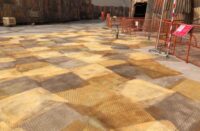


In design driven construction, there is always a moment when imagination meets reality. Sketches, renderings, and narratives must eventually transform into materials, methods, and installation sequences that can be built in the field. In decorative concrete and resinous flooring systems, that transition can be especially complex.
Modern architectural surfaces are no longer limited to simple coatings or monolithic slabs. Today’s environments incorporate layered overlays, hybrid resinous systems, custom textures, embedded aggregates, and intricate visual patterns. These finishes often serve both aesthetic and performance roles at the same time.
Yet despite advances in materials and installation technology, many surface failures still occur. Decorative overlays debond, resinous coatings blister, and carefully designed finishes deteriorate long before their intended service life.
When these issues arise, attention often turns first to the product or the installer. In many cases, however, the root cause often lies elsewhere.
Most failures are not material failures. They are alignment failures.
They occur when the relationship between design intent, project documentation, and field execution breaks down. When these three elements work independently rather than together, the resulting system becomes vulnerable to misinterpretation, sequencing conflicts, and installation challenges.
Understanding this relationship is the foundation of what can be described as the Constructability Triangle.
Constructability as a Design Responsibility
Constructability is often misunderstood as a question of whether something can physically be built. In reality, it asks a deeper question: can it be built correctly while preserving durability, safety, budget, and design intent?
This perspective recognizes that creative design decisions have real consequences for materials and installation. Early choices about system thickness, surface preparation, moisture mitigation, and environmental exposure directly influence how a finish will perform once installed.
In decorative concrete and resinous flooring systems, these variables become particularly important. Concrete slabs move and transmit moisture. Thin build finishes require proper surface profiling to achieve adequate bond strength. Layered systems depend on compatible chemistries and curing windows. When these realities are not considered early, even a well intentioned design can encounter serious challenges during construction.
Constructability therefore becomes part of the design process itself. It requires designers, specifiers, and installers to understand not only how a finish should look, but how it will behave over time.
Documentation as the Bridge Between Vision and Execution
Once design intent is established, documentation becomes the mechanism that translates that vision into a buildable system.
Documentation should not be viewed simply as paperwork. At its best, it functions as a communication tool that aligns expectations across the entire project team. Finish narratives, system diagrams, material callouts, and installation sequencing all help define how a design will actually be realized in the field.
Clear documentation reduces ambiguity and minimizes interpretation. It establishes the performance requirements of the system while also defining the methods required to achieve them.
In complex decorative systems, this clarity is essential. Without documentation that addresses strict requirements directly, installers may be forced to make decisions on site that were never fully considered during design.
Effective documentation ensures that everyone involved understands not only what the finish should look like, but how it should be built and how it should be maintained well into its service life.
Introducing the Constructability Triangle
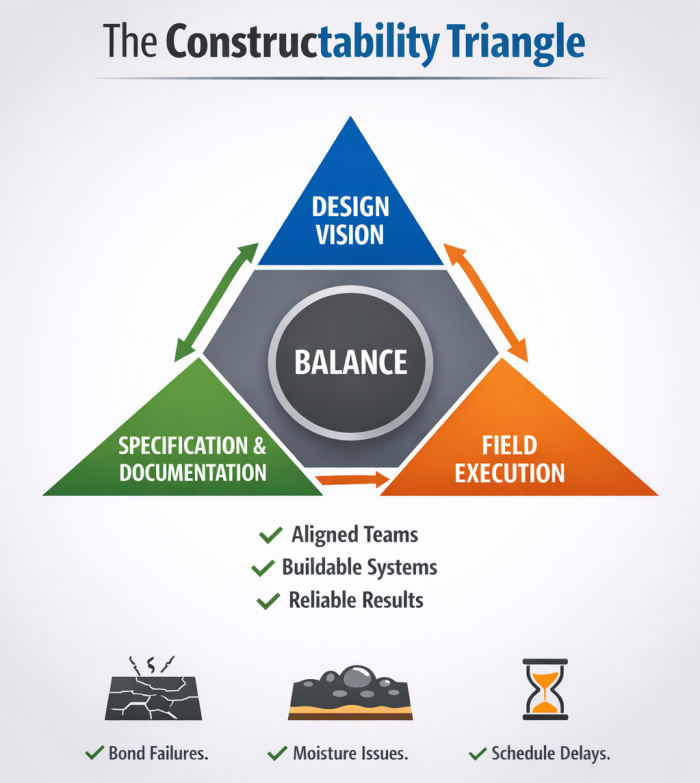
The relationship between design intent, documentation, and installation can be visualized as a triangle. Each side represents a critical component of successful construction.
Design vision defines the aesthetic and experiential goals of the project. Specification and documentation translate those goals into technical requirements and system assemblies. Field execution transforms those plans into physical reality through surface preparation, material application, and craftsmanship.
When these three elements remain aligned, the system performs as intended. When one side weakens, the entire structure becomes unstable. Documentation that lacks clarity can force installers to interpret intent under schedule pressure, and installation shortcuts can undermine otherwise well designed systems. Installation sequencing can also introduce risk. Trade stacking, compressed schedules, and environmental conditions such as temperature and humidity can alter curing behavior and material performance. Systems designed under ideal conditions may behave very differently when installed on an active construction site.
The strength of a project therefore depends not on any single component, but on the balance between all three.
Mockups: Where Theory Meets Reality
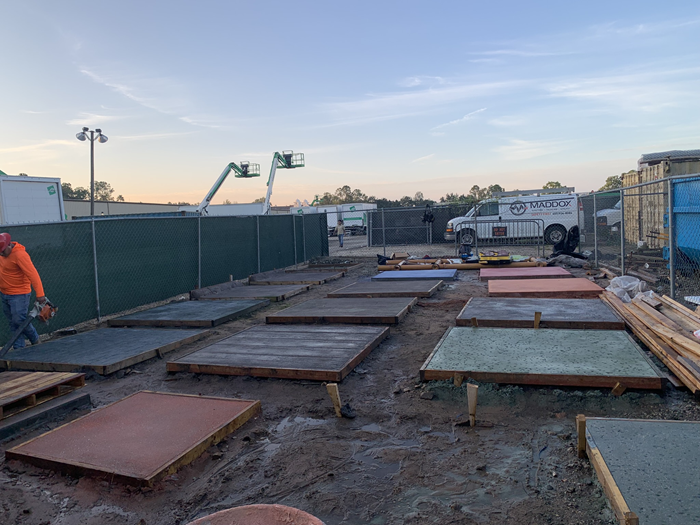
One of the most effective ways to protect the Constructability Triangle is through mockups and material testing.
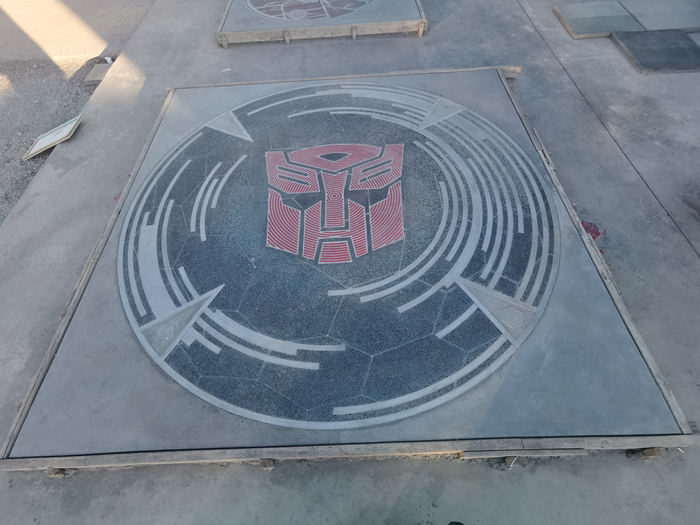
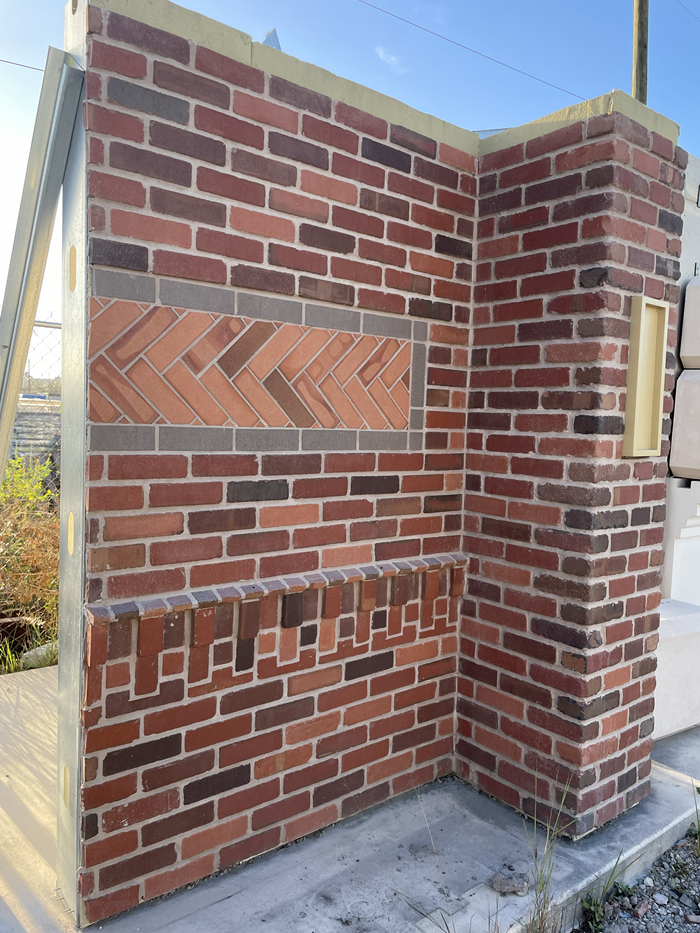
Mockups allow project teams to evaluate finishes under realistic conditions before full installation begins. Color variation, texture scale, aggregate exposure, and reflectivity can be observed directly rather than imagined through drawings or samples.
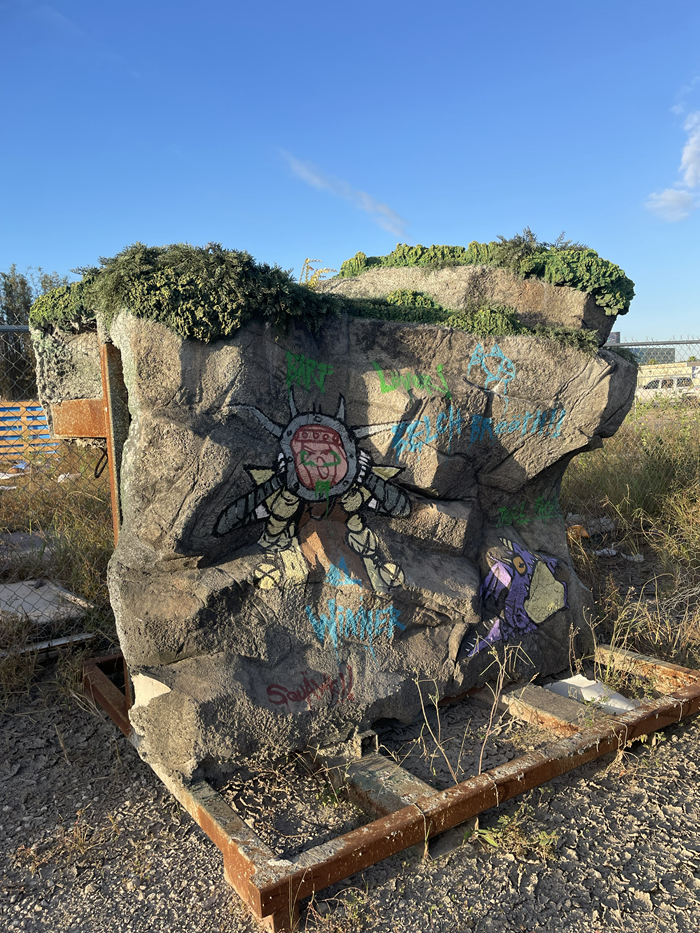
Equally important, mockups allow teams to test sequencing and installation logic. Applicators can confirm surface preparation requirements, evaluate curing behavior, and determine how multiple layers interact with one another.
These exercises provide valuable feedback while adjustments are still manageable. Instead of discovering problems after hundreds or thousands of square feet have been installed, teams can refine the system early in the process.
In this way, mockups transform design intent into practical knowledge and reinforce alignment across the entire project team.
Bridging Design, Manufacturing, and Installation
Maintaining balance within the Constructability Triangle requires collaboration across disciplines.
Architects and designers bring the creative vision that defines the character of a project. Manufacturers contribute expertise in material chemistry, system compatibility, and performance limitations. Contractors and installers provide insight into field conditions, sequencing, and practical installation methods.
When these perspectives are integrated early, the resulting systems become far more resilient. Specifications reflect realistic installation requirements. Materials are selected with an understanding of substrate behavior and environmental exposure. Installation teams enter the project with clarity about both expectations and constraints.
Rather than limiting creativity, this collaboration allows ambitious ideas to be executed with confidence.
Durable Surfaces Begin with Alignment
Decorative concrete and resinous flooring systems have expanded the possibilities of architectural design. From exposed aggregate plazas to high performance resinous installations, these materials allow designers to create environments that are both expressive and durable.
Achieving that balance requires more than good materials or skilled installers alone. It requires alignment between the people responsible for envisioning, documenting, and building the system.
The Constructability Triangle offers a simple framework for understanding that relationship. When design vision, documentation, and field execution remain in balance, creative surfaces can perform as beautifully as they appear.
And when that balance is maintained, the result is not only a successful installation, but a built environment capable of enduring long after the project is complete.


