 One of the challenges for a high quality architectural concrete installation is the selection of the right sealer. From chemical staining, discoloring, and the day-to-day abuses these surfaces receive, choosing a sealer can make or break the entire project. So, what do you need to look for in a sealer? How do you also match the right sealer to your type of project and environment?
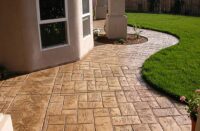
Architectural concrete is conventional concrete that has been colored, stained, stamped, saw-cut, or sandblasted to create a creative effect or to simulate tile, stone or brick. It can also be polymer-modified — the addition of a 1/8 to 1/2 inch decorative overlay topping — which can also be colored, stamped or stained to create the desired finish and look. Generally, clear sealer finishes for these surfaces come in many different formulations and levels of durability. Additionally, it can be applied to both architectural concrete and to polymer-modified cement overlays.
Concrete sealers provide added protection and may, if applied properly, extend the usable life of an installation. There are many sealer options made from gum resins, linseed oil, silicone derivatives (e.g., silane, siloxane, and siliconate), epoxy, acrylic, urethane, and polyurethane. Less common, and generally more expensive, hybrids like methylmethacrylate (MMA) and polyurea sealers are also options. Both water-based (typically low-solid penetratives) and solvenated (typically high-solid, high-build) coating solutions are available. Single-component and two- (or three-) component mixes are also options to be considered.
Choosing the Right Sealer
The unique characteristics of concrete and other cementitious surfaces make the selection of a sealer a serious matter. Several questions need to be asked before selecting the appropriate sealer:
- To what conditions will the concrete surface be exposed? (e.g., hot, cold, wet, night condensation, interior or exterior, ultraviolet light, etc.) Will there be heavy foot or vehicular traffic?
- What is the condition of the concrete? (i.e., new, old, moisture problems.)
- What are the schedule and budget for the project? (i.e., an accelerated application, or adequate time; sealer factored into cost of project, or required as an afterthought.)
- Are there slippage liability issues to be considered? (i.e., pedestrian traffic in potential wet conditions.)
- Are there environmental “green” building conditions that need to addressed? (e.g., local Department of Environmental Quality standards are required to be met.)
Sealer Selection Options
There are two major purposes for sealers. Firstly, is to protect the concrete surface from moisture intrusion. Secondly, is to help create the finish appearance desired for the application. In addition, there are other benefits to using a sealer, including lower maintenance, easier cleaning, efflorescence prevention (i.e., the appearance of white powder residue caused as residual water in the concrete evaporates leaving the dissolved salts on the concrete surface), and slippage protection.
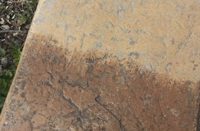
Altogether, there are two main types of concrete sealers. Those designed to penetrate the concrete, leaving it looking dry, yet water repellent, and those that form a film on the surface, giving it a wet look. Penetrating sealers are low viscosity materials that fill the surface pores of the substrate, but do not leave a polymer film above the peaks of the concrete.
Coating sealers provide better protection of the substrate and are easier to clean than penetrating sealers. However, they create a smoother surface that is more likely to present a slip hazard under wet conditions. The incorporation of aggregate particles in the coating material can help alleviate this potential liability, but requires a careful understanding of the correct size and amount of the aggregate relative to the sealer type selected for the project.
Different Sealers for Different Work
Most penetrating sealers are made from by-products of silicone called silanes, siloxanes, or siliconates, and are designed to penetrate concrete pores. Once applied, they react with the alkaline materials in the concrete mix and the moisture present to form a silicone seal, making concrete water-repellent. Penetrating sealers usually cost more. However, they generally do not need to repaired or reapplied as often. Another reason penetrating sealers are popular is, that when properly applied, they do not change the concrete’s appearance.
Coating sealers provide better protection of the substrate and are easier to clean than penetrating sealers. However, they create a smoother surface that is more likely to present a slip hazard under wet conditions. The incorporation of aggregate particles in the coating material can help alleviate this potential liability, but requires a careful understanding of the correct size and amount of the aggregate relative to the sealer type selected for the project.
Most penetrating sealers are made from by-products of silicone called silanes, siloxanes, or siliconates, and are designed to penetrate concrete pores. Once applied, they react with the alkaline materials in the concrete mix and the moisture present to form a silicone seal, making concrete water-repellent. Penetrating sealers usually cost more. However, they generally do not need to repaired or reapplied as often. Another reason penetrating sealers are popular is, that when properly applied, they do not change the concrete’s appearance.
Other Types of Sealers
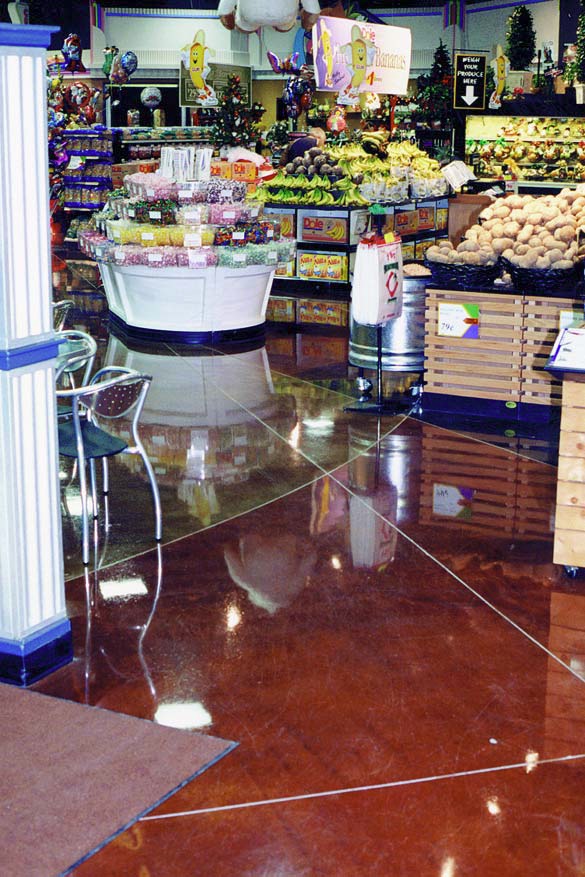
Coating sealers are usually made from epoxy, acrylic or urethane-based compounds. They form a thin coating on the concrete’s surface, leaving a wet look similar to varnish on wood. These products tend to be less expensive per gallon than penetrating sealers, but need re-applications more frequently. They also protect against some stains better. However, some coating sealers tend to darken concrete. In addition, they normally require the addition of aggregates to increase surface friction and help keep feet or tires from slipping on the finished surface.
Other important considerations and properties to evaluate when selecting a sealer include penetration depth, reactivity to concrete materials, service life, water absorption, water vapor transmission, and crack bridging characteristics. Moreover, sealers can have (or not have) other features that may be important to the project, including UV protection, matte, satin or high gloss finishes, coloring agents, chemical-resistance. Furthermore, newer cross-linked multi-component sealers offer improved durability and adhesion. A review of the appropriate project requirements should be part of the selection process for each project.
Important Selection Factors
The single most important factor in selecting an appropriate sealer is defining the impact the environment will have on the particular surface to be sealed. Before specifying the sealer, you should carry out a thorough site inspection with the customer to assess such factors as anticipated type and severity of conditions (e.g., pedestrian, vehicular, machinery, chemicals, etc.), the condition of the substrate and installation environment. Will the surface be exposed to sunlight or artificial UV sources (e.g., metal halide lighting)? Are there unusual humidity issues to be considered?
The timing/scheduling of the installation may also have an impact on the sealers available for selection. Some sealers allow for quick installation, and therefore keep downtime costs to a minimum, while others require cure times of one week to achieve full chemical and mechanical resistance. As a rule, water-based, solvent free materials allow for simpler application from a health and safety perspective.
Keep Cost in Mind
Another factor is the cost of the application. Cost considerations extend beyond the final bill presented to the owner by the contractor. Pre-project cost analysis should include the impact of the overall installation time, the life expectancy of the sealer, and how much additional materials and work will be necessary for ongoing maintenance. These are all factors associated with the total cost of any sealer application.
It is not necessarily more cost-effective to choose the cheapest sealer, when a longer life cycle option, although appearing more expensive at the initial pricing phase, will be more cost effective for the owner in the long-term than a finish that needs extensive repairs and recoating year after year.
Similarly, for high-solid coating sealers (epoxy, urethane and polyurethane) pricing analysis should be based on mil-thickness requirements for the installation, which can vary manufacturer to manufacturer for the same “recommended” square footage coverage per gallon of sealer. One other important factor related to calculating the actual cost of multi-component mixes is that the result of the combined solutions may be less than equal to the “gallon” stated in the coverage specification due to allowances for mixing.
Surface Preparation is Key
Two main factors cause problems with sealers. Firstly, there is the over-application that causes curing or delayed drying problems, peeling and blush. Secondly, there is the failure to perform the appropriate surface preparation that causes failure in adhesion.
To address the first issue, the contractor should insure that the installers are familiar with the product they are installing, and that they have received the manufacturer’s instructions and training on the best methods to apply the product. One area of complete agreement among concrete experts is that when it comes to application, following the manufacturer’s directions is essential for a good installation. There is little flexibility when it comes to concrete sealers. Shortcutting the manufacturer’s instructions will virtually guarantee later problems. Application condition and thickness specifications should be followed closely, and multiple applications should follow manufacturer’s guidelines for interim curing periods.
Specifically, to achieve the best results for a surface preparation, the concrete should be structurally sound, clean, and well cured. Moreover, the concrete surface should have the texture of medium-grit (100-150 grit) sandpaper and should have no visible efflorescence. For a new project, the concrete should be as free from moisture as possible before applying a coating system. Hollow areas and voids should be filled with either a cementitious repair compound or a resin-based material, like an epoxy.
Preventing Moisture
Most experts agree that the biggest enemy of concrete floors is moisture. The best way to prevent moisture problems with new concrete is not to minimize the curing process — no less than 28 days. This curing period also allows time for the pH to neutralize.
It is important that the concrete surface be thoroughly dry and clean of any residues that might inhibit sealant penetration. Likewise, concrete surfaces to be finished with a coating sealer must be free from unwanted contaminates that may weaken the adhesion of the finished application.
The recommended approach is to scrub the surface thoroughly with a floor machine using an aggressive nylogrit brush. Then follow this with an application of a good commercial cleaner. But do not let the cleaning solution dry on the surface. Basically rinse thoroughly to remove any possible detergent residue. Rinsing with a pressure washer is ideal.
Surfaces that have been acid-stained must be properly pH-neutralized with a strong base solution and rinsed as well. Water-based sealers applied to an improperly neutralized stained surface are subject to premature failure. However, a freshly placed polymer concrete overlay requires no surface preparation.
Keep Temperature in Mind
Temperature is another factor in a successful sealer application. It is important to measure the surface temperature of the area before sealing. Sealers will tend to dry faster than designed if applied to a hot surface. If the surface is too hot, the sealer may not penetrate properly, spread to the required thickness, and or bond.
The normal flowing and curing characteristics of sealers are changed if the surface temperature is too cold as well. It can have a negative effect on penetrating and spreading. In addition, the components of a water-based sealer that is allowed to freeze can separate. So it prevents the sealer’s chemical bond with the concrete. Subsequently, thawing and remixing is rarely sufficient to re-blend the mixture.
Because it is highly alkaline, a concrete surface can adversely react with a variety of coatings, such as alkyds or oil-based materials. Primary coating properties that affect their compatibility with concrete surfaces include tolerance to alkalinity, moisture sensitivity, cure shrinkage, elasticity, viscosity, and permeability.
Health and Safety Concerns Arise
Occasionally, the client will rely on the contractor for direction regarding the addition of a slip-resistant treatment. Due to the potential harm and liability that can occur out of a slip and fall accident, a careful and proactive approach is best. Above all, any exterior surface to be sealed or any interior surface that will be exposed to wet or oily conditions needs slip-resistant treatment. Surfaces with severe slopes are not good candidates for polymer coatings.
Occasionally, the customer will resist the idea of a slip-resistant treatment fearing that the surface will become more difficult to clean. Engineering slip-resistance involves choosing the right size particle to be imbedded in the coating film and the proper spacing of the particles. So, if the slip-resistant treatment is properly engineered and executed, surface cleanability will not be reduced.
Environmental Concerns
The size and type of aggregate used dictates the aggressiveness of the slip-resistance (based on the coefficient of friction). So it is advisable to install a test patch before the complete application to assess the correct level. Typically, synthetic polymer particles such as acrylic or polypropylene beads (known as “sharks teeth” or “alligator teeth”) are mixed into the coating for residential and light commercial applications. For heavier use areas, bleached aluminum oxide particles, colored quartz or glass beads are recommended. Whichever additive is chosen, it should be selected based on the thickness of the final coating, and the reactive compatibility with sealer.
Meanwhile, as customer awareness and demand for “green” buildings increases, concerns for reducing emissions of volatile organic compounds (VOCs) and reducing odors has become a major factor in the selection and application of concrete sealers. Certainly, between the requirements of local Departments of Environmental Quality and more building owners seeking certification under the Green Building Council’s Leadership in Energy and Environmental Design (LEED™) criteria, selection of sealers with VOC-compliance has become a more stringent requirement. Lastly, avoiding sealers containing aldehydes, amines, ammonia, carboxylic acids, isocyanates, and phenols is highly recommended.
The Results of Doing It Right
In summary, it is important to understand the nature of each particular decorative concrete surface to ensure appropriate surface preparation and sealer application. Above all, properly selected and properly applied, concrete sealers and coatings add value, beauty and strength to the concrete surface. Lastly, taking the time to determine the right solution will avoid future problems and ensure a happy customer.
Comparison of Sealer Features
|
Silicon
|
Epoxy
|
Acrylic
|
Urethane
|
Polyurethane
|
|
|
Interior
|
 |
|
|
|
|
|
Exterior
|
|
– |
|
– |
|
|
UV Stable
|
|
– |
|
– |
|
|
Matte
|
|
– |
|
– | – |
|
Satin
|
– |
|
|
|
|
|
Glossy
|
– |
|
|
|
|
|
Coloring Additives
|
– |
|
|
|
|
|
Chemical Resistant
|
|
|
– |
|
|
|
Abrasion Resistant
|
– |
|
– |
|
|