Faux Rocks! Concrete Rocks
Synthetic rock features are not new. Turn of the century examples exist in the United States & elsewhere around the world. But it is probably Walt Disney, and his Disneyland in Anaheim, California, that gave faux rock a real boost.
by Susan Brimo-Cox
fashioning synthetic rock can be an engineering challenge. On the other, from back yard to theme park, creating geologic reproductions and making them look — naturally — like the real McCoy is definitely an art.
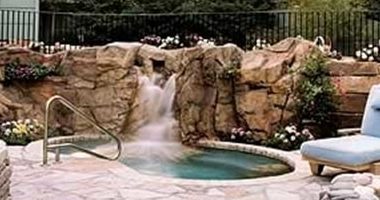
Synthetic rock features are not new. Turn of the century examples exist in the United States and elsewhere around the world. But it is probably Walt Disney, and his Disneyland in Anaheim, California, that gave faux rock a real boost. Now, synthetic rock is commonplace at theme parks, zoos, aquariums, museums, resorts, hotels and many other places — and there's a growing demand for residential applications. Swimming pools, ponds, waterfalls, fire pits, outdoor seating areas, retaining walls and exterior veneers are just a few of the ways synthetic concrete rocks are finding their way into our back yards.
Concrete is an ideal material for synthetic rock. Cement hasn't changed much over the years, but the equipment and techniques have all gotten better. Compared to the cost and engineering problems associated with real rock, concrete is quite affordable and easy to use. Whereas fiberglass — another material often used to create faux rock — is a highly regulated technique. Acrylics, urethane and plastics are also used to simulate rock, but they are expensive and typically don't give the same realistic appearance. For longevity, concrete rocks are hard to beat (no pun intended). In fact, concrete rocks can achieve such a high degree of concrete strength they could last longer than some real rock types.
|