
 Stripping sealer off concrete is, as Steven Hicks puts it, “nasty.”
It involves strong-smelling, caustic chemicals. It fouls up your equipment. It can burn your skin and pollute your client’s groundwater. “It’s not an easy process,” says Hicks, president of Concrete Science International LLC, a Minnesota concrete contracting firm with franchises across the country. “We avoid it like the plague. You could probably make a living stripping sealer off concrete, but nobody wants to do it.”
It’s not exactly a cash cow either. The going national rate for removing sealer is $1 to $2 per square foot, Hicks says. That’s still only about break-even. “I will not allow any of my company’s locations to do stripping work for under a dollar. You just cannot make money on it.”
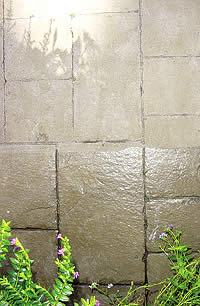 But when a contractor is hired to renovate a dingy-looking slab of concrete, removing sealer is often part of the job.
Sealers can be removed with mechanical means such as sandblasting or grinding. But for many contractors, it’s a last resort. It destroys the original surface, exposes the aggregate and is a mess to clean up.
Use the alternative — chemicals — and you can find yourself glove-deep in methylene chloride, which can be so strong that the vapors will burn you simply by creeping between your skin and clothing.
If you want to avoid the scarier stuff, Hicks says, you’re left with strippers that work very, very slowly.
Then there’s the dissolved sealer itself, “snotty-looking nasty stuff,” according to Hicks. You have to wash it off. And because it’s too toxic to wash down the drain or onto a lawn, you have to collect it.
“It’s a matter of, do you want to deal with dust or do you want to deal with fumes?” says Larry Good, chemical engineer with Specialty Concrete Products Inc.
In Good’s experience, stripping is not that common. “There are pigmented sealers on the market that can be used without having to completely strip,” he says. “Depending on the surface, that could be much cheaper.”
Gary Henry, business communications specialist and technical writer with Prosoco, says that only film-forming (topical) sealers typically need to be removed. “You should be able to put compatible coatings over penetrating sealers,” he says.
At the end of a sealer’s lifespan, recoating may suffice, Henry says. If you’re applying the same sealer and the old coat is not worn or damaged, you may not need to remove the previous layer.
 “They wear off typically,” Hicks says. “If you’re taking it off, you’re taking it off for a reason.”
In some situations, stripping is unavoidable. Maybe the coating is irreparably yellowed, peeled, cracked, blistered or “blushing” from trapped water vapor. Perhaps some areas are more worn than others. The new sealer may not be compatible with the original. The floor may already bear so many coats of sealer that it is dulled or discolored. A fresh layer of solvent may not have allowed the newly wet layer underneath to dry properly, leaving a surface that is easily marred and prone to clouding. Or, maybe the client just doesn’t like the way it looks.
“I should think the most common is, it’s just time to replace coatings,” says Henry.
Choosing a stripper
Different kinds of sealers respond to different kinds of stripping chemicals. Generally, like strips like.
Alkaline water-based strippers are effective on one-part waterborne acrylics and some urethane-acrylic one-part systems, says Mark Granados, a chemist at Surtec Inc. Solvent-based strippers attack tougher waterborne sealers, waterborne urethanes and one-part solvent-based acrylics. High-performance coatings, such as two-part urethanes and epoxies, often require methylene chloride-based strippers. Methylene chloride blisters a sealer off the concrete instead of dissolving it into goo like a typical solvent stripper.
 So, which remover should you use?
Test six or seven kinds on an inconspicuous part of the floor. “Start with the mildest you can find and work up to the heavy artillery,” Henry says.
Specialized goggles will help a contractor inspect the effects on a test patch beforehand. “I put the owner of the floor right there with me,” Hicks says.
Napier Environmental Technologies Inc. makes a 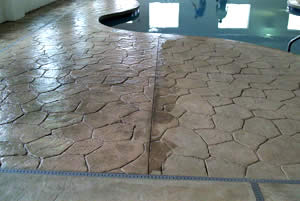 water-based acidic stripper that the company says will remove any paint or sealer while etching the surface at the same time. It is nontoxic and biodegradable, and it won’t burn the skin. “As far as I know, no other stripper on the market will remove paint and etch at the same time,” says Nadia Bernard, Napier sales and marketing analyst.
Good, of Specialty Concrete Products, favors a semipaste product that uses methylene chloride as its active ingredient. “You can let it dry, scrape it up,” he says. “Once it’s dry, it’s no longer considered hazardous. It can go in the dumpster.”
Most cleaners work by being applied, scrubbed in, then washed off. “After awhile it’s going to be saturated and gummy,” Granados says. “Just move it around until you see no activity at all. Then it’s time to collect it and start again.”
Allowing insufficient dwell time for the stripper is a common problem, Granados warned, as is lingering sealer in expansion joints, saw cuts and low spots.
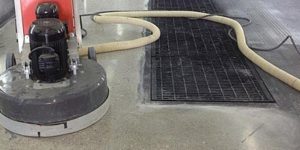
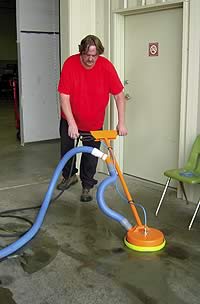
To draw sealer from below the surface of the concrete, he suggests a wet vacuum or sandblaster. “I highly recommend investing in a hand-operated rotary floor machine with drivers to accommodate both scrubbing pads or brushes and a wet-dry vacuum, or a walk-behind automatic scrubber,” he says.
Good recommends using a finish sander to buff away any remaining bits of sealer. Hicks touches up with a scrub brush. His company has developed a machine that pressure-washes and vacuums all at once. “Water seems to be the best way to get the snotty concoction loose,” he says. “It’s just like stripping varnish off wood.”
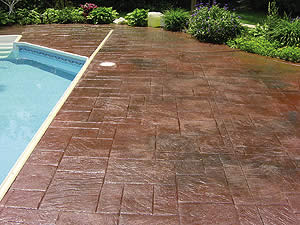 Henry recommends using a poultice made with cleaner and a clay base (cat litter will work) to draw residual sealer out of concrete. The poultice is covered with special paper that protects the paste and keeps it wet. As it dries, it draws the contaminating particles out of the pores.
Generally, chemical stripping will not affect the pH of concrete. But residual alkaline cleaner might. A thorough rinse and vacuum will remove the residue. Also, Hicks says, a manufacturer may not honor the warranty on a new sealer unless the contractor neutralizes the slab with baking soda, vinegar, or another effective substance.
Finally, every expansion joint and saw cut of the slab must be completely dry before new sealer is applied.
Protecting color
Sealer removal may attack the color of the slab as well. “Testing should always be the first thing you do,” Henry says “to see how the remover affects the stain.”
What’s more, aggressive scrubbing to remove the sealer can wear away colored substrate, Granados says. “Proper testing to select the appropriate stripper and allowing the stripper to do the work with a bare minimum of scrubbing will protect the decorative concrete surface.”
For Hicks, the most colorful element of a stripping job is managing customer expectations. A contractor who takes on a stripping job is, by definition, already dealing with an unhappy customer, he notes. “You’re solving somebody’s problem, which means you’re in the middle of a negative situation instead of a positive one. If there’s ever a time for expectation management, it’s stripping and resealing.”
Take care of this problem in the testing phase, he advises, particularly if restaining or resealing is involved. Testing only one area encourages the false impression that every other spot will turn out exactly the same way, he says. So do two or three. You’ll likely end up with two or three different shades. “Have the guy settle for a range, instead of a single sample,” he says.
Also, test the most difficult spot on the floor, not one that seems to be average. When he bases his estimate on the most difficult areas, the job can only go better than expected, he says.
Review the Material Safety Data Sheets and directions for each product. Runoff control options include oil absorption pads and a “vacuum boom,” a drilled half-pipe attached to a wet-vacuum.
Technical service is essential, Henry says. Detailed literature and a toll-free phone line are signs the company can offer guidance in a pinch, he says. Otherwise, shop elsewhere. “Don’t try to handle it alone. Chances are you may just make it worse.”