
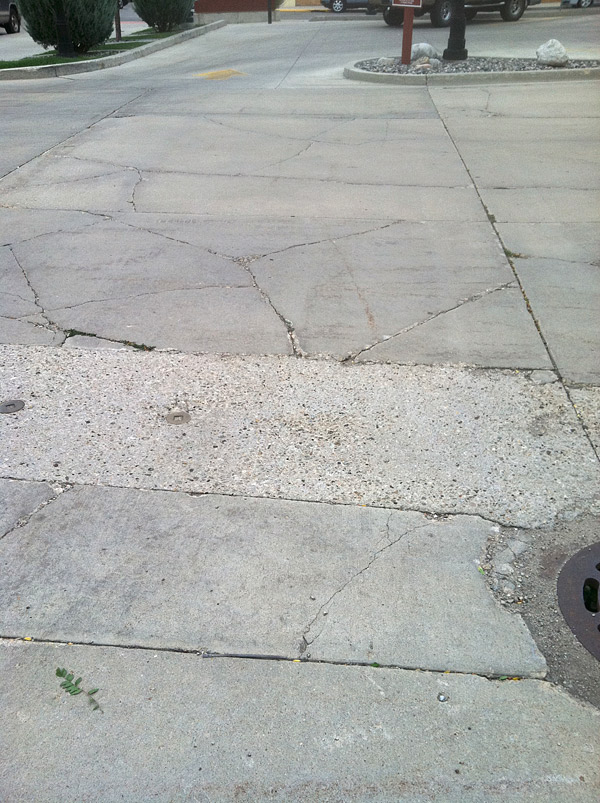
Don’t make conditions worse.
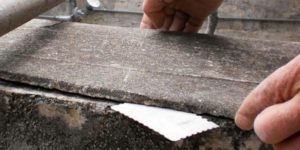
If the crack is of hairline width, it is usually better to leave it alone. For additional protection against deterioration, apply an epoxy coating over crack.
Cut out only when necessary.
If the crack snapped cleanly, with no islands, and if the edges of the crack have not spalled, merely fill the crack with a proper epoxy (semi-rigid).
Cut out as narrow as possible.
Don’t use a cutting tool (router, etc.) that will create a 1/2-inch wide repair of a 1⁄8″ wide crack.
Cut out deep enough.
When cutting out cracks, always go at least 1/2-inchdeep to provide enough “bite” for the epoxy along the joint walls.
Don’t weld the crack.
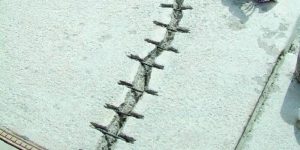
Most cracks in slabs-on-grade do not present structural problems. Welding the slab together at the crack may merely result in another crack occurring adjacent to the first. Use a semi-rigid epoxy for most crack repairs, especially for the first two years.
Don’t feather-edge repairs.
To feather means to taper to -0- thickness. Instead, create a vertical edge of at least 1/2-inch deep on all crack repairs.
This information was taken with permission from the Web site of Metzger/McGuire, a manufacturer of epoxy and polyurea joint fillers and repair products.