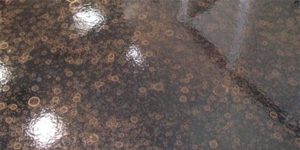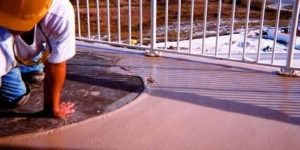
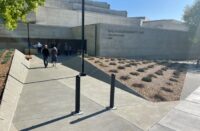
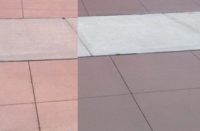
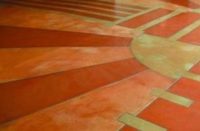
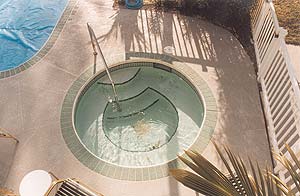
 Old surfaces get a whole new look with resurfacing systems that level; add dimension, color and durability.
Putting a new face on old concrete is nothing new. In fact, some of the better-known theme parks, hotels, airports and malls have walkways that have been resurfaced using several popular methods. Many of those pedestrian-traveled venues that look like cobblestone, slate, brick and marble are in fact, cement surfaces fashioned to look like more expensive materials at a fraction of the cost. Experienced contractors have been applying these textured finishes for years, adding to their profitability and reputations. If you haven’t ventured into this part of the business, it’s never too late to add another practical and colorful technique to your repertoire.
When dealing with existing concrete there are many options available that can enhance the surface appearance including texturing, scoring, stamping and staining. Determining which option is the best will depend on the condition of the concrete and the final desired appearance. When original concrete is in good condition, customers can consider any of these methods. Another option is sandblasting a design into the surface using stencils or templates. Various patterns and designs can also be achieved by scoring the surface.
In addition to providing a whole new look to existing concrete, resurfacing is also extremely economical. Resurfacing offers other benefits such as added safety and durability. “Unlike plain concrete or tile, decorative systems can be applied in a slip resistant finish,” says Rick Cox of Spray-Crete Industries.
“This feature of resurfacing is crucial in pool areas, and other areas like wheelchair access ramps, building entrances, and stairways.” Resurfacing products also provide extremely high compressive strength, UV resistance and resistance to stains, mildew, oil, and most solvents. Product composition is what gives these resurfacing materials such resilience. For example, Spray-Crete Industries uses high quality Portland cement combined with an exclusive liquid bonding additive for their Spray-Crete Base and Texture Coat. The water composition of most resurfacing products also makes them environmentally friendly to use, and easy to clean up when the job is done.
Other substrates like brick, block, tile, exposed aggregate and even wood decking are also ideal for resurfacing applications because of its durability and bonding strength. There are also many interior and exterior application possibilities such as pool decks, driveways, entryways, sidewalks, kitchens, baths and steps. Virtually any surface that is appropriate for walking or driving can be resurfaced.
Perhaps the only time resurfacing is not recommended is when the concrete is so badly damaged, it needs to be removed. In these cases, old concrete is replaced with new. If a decorative finish is desired, the contractor can work with the customer to determine the best finish for the job. Stamping, stenciling, and coloring freshly placed concrete become the sensible alternative.This option produces beautiful, realistic looking brick, paver or stone-like finishes. However, the process is more costly than resurfacing since the job involves creating a new “foundation.”
Getting Started
As with any new material or product, consulting the manufacturer on application techniques and tips is the best way to ensure success. Many manufacturers offer hands-on training in the field or organized classes for a more in-depth coverage of product uses, capabilities and trouble shooting. In addition, most resurfacing products are “systems,” that involve several components that should be used together.
Preparing for the base coat is the next step. Most products come packaged in 50 lb. bags, which are mixed with a bonding agent. Typically, the resurfacing material is used as both a base coat and texture coat. Mixing is best performed with a 450 to 600-rpm drill and mixing paddle. The ratio of dry product to bonding additive will depend on the type of texture you’re trying to achieve. Again, the manufacturer can supply the correct “recipe” for each application. Once you have the desired consistency, the product can be applied with a hopper gun, towel or squeegee, or a combination of methods. The thickness of the application can also vary from feather-edge to an eighth of an inch in depth. Some products can even be applied up to two inches thick.
Other tools and materials needed depend on the finish type. Manufacturers can supply a list of tools needed ( stencils, trowels, spray equipment, etc.) along with information on the necessary safety equipment. For example, manufacturers recommend wearing safety goggles and protective gloves during all stages of application including pressure washing. Respirators must also be worn when applying solvent-based concrete sealers due to fumes. If acid etching will be part of the job, check with the manufacturer for additional safety guidelines.
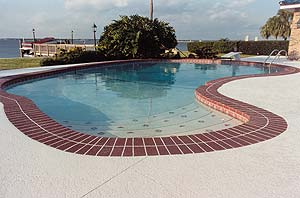
Taking the Right Steps for a Successful Job
Proper surface preparation is critical to the success of the job. The best product in the world won’t stick if you don’t properly prepare the surface. No matter how sound the concrete surface appears, review three principles before you begin.
1. Clean — The host surface must be free of dust, dirt, oil, grease, paint, and curing components. Customarily, the surface should be washed with an industrial degreaser. All loose, delaminating, flaking, or spalling concrete should be mechanically removed by pressure washer, abrasive systems, scarifier, etc.
2. Cured — New concrete should be fully hydrated. Cure times can vary widely depending upon climate. Cooler climates make take up to 28 days, while hot climates may sufficiently cure in as little as 4 days.
3. Profiled — The host surface should be acid-etched or shot-blasted to open the “pores” of the concrete. This allows the fine sand and latex modifier to flow into the pores and marry as one unit with the concrete. Stress cracks and pitting should be filled with an appropriate quality concrete patching compound. In addition to checking with your resurfacing product manufacturers, detailed surface preparation guidelines specifically designed for concrete are also available from the International Concrete Repair Institute.
“Important to keep in mind with any and all crack repairs is the fact that over time, cracks will return. Cracks can best be hidden if they can become a part of your decorative work (e.g. grout lines, color transitions, or fancy ivy or grape vines) on the concrete surface,” says Mike Lowe, Jr. of Increte Systems, Inc.
Once all surface preparation is completed, the actual resurfacing can start. Base coats are applied for two reasons: to level the surface, and to establish a base or grout color in a typical two-color application. The consistency of the base coat will depend on job requirements. For example, a thin liquid coat will fill small imperfections or pock marks. This thin coat is not meant to provide 100 percent coverage. However, a thicker base coat will help level the surface and offer total coverage. Either of these applications can be done with a squeegee, gage rake or trowel. Before the next step, surfaces should be allowed to dry at least two hours.
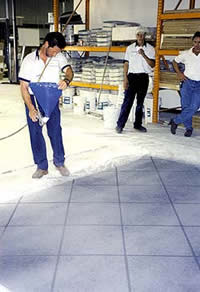 Stencil installation is next. There are many designs to choose from: some stencils are easier to work with than others. In any case, stencils are measured, cut to fit and held in place with putty. Once the stencil is secure, a color coat can be sprayed on with a hopper gun. Usually the color coat is the same product (with color added) as the base coat. A wide range of textures can be achieved depending on the pressure and type of spray nozzle used, and whether the top coat is troweled. After drying, two to three hours, remove the stencils and sweep away any loose putty and texturing debris. (A leaf blower is ideal for removing any remaining texturing debris.) The surface is now ready for sealer application. Check manufacturer’s directions on how many coats of sealer to use: directions for interior and exterior work may vary. In general, the surface will be ready to walk on in about 24 hours. Surfaces exposed to vehicle traffic should dry for four full days before they are used. According to industry standards, the surface will not be completely cured for about 28 days.
New Niche in the Business
While decorative resurfacing is not a new technique, demand for these applications is growing. “Polymer modified cements have been in use for decades, but it’s only been in the last five years or so that architects, builders and homeowners have really gotten turned on to this aspect of decorative concrete,” says Rick Cox. Because of their water-based formulations, resurfacing materials are easy to work with. They are also versatile and offer relatively fast completion times. The many advantages provided by resurfacing along with renewed interest from customers makes this application a solid addition to the services you offer to customers.