


Have you ever gotten that early-morning or late-night call from an unhappy owner telling you that the color is lighter than they wanted … or darker … or does not match from one pour to the next? If you haven’t been on the receiving end of one of those calls, good for you! If you have, then you know what we are talking about.
Integrally colored concrete represents a substantial portion of the overall decorative concrete market in the United States.
Having a good relationship with your ready-mix supplier is important to any concrete job, but it is imperative when using integral color.
Ways to add integral color
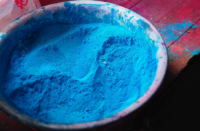
As most of you probably already know, integral color is achieved by adding a colored liquid or powder to your ready-mixed concrete. Both liquid and powder integral color can be added at the ready-mix plant or at the job site. In most cases liquid color is dispensed directly into the mix through an integrated computerized system.
Other times the liquid color is dispensed into pails and then it is added to the truck. When adding liquid color by pail it is important to rinse all of the pigment from the pail into the truck.
Powdered color is packaged in a variety of different methods. A popular form of packaging for powder integral color is in dissolvable bags that are tossed directly into the truck and disintegrate when properly mixed in. Dry-packaged pigment weights will vary by color and by manufacturer, but the most common and easiest-to-use color packages are those that color 1 cubic yard of concrete. Pigment should conform to ASTM Standard C979 (Standard Specification for Pigments for Integrally Colored Concrete).
Communicating
On smaller jobs a simple phone call to your supplier to discuss your pour is encouraged. On a larger project, it is advised that a prepour meeting be conducted with everyone on the project — mix designs should be reviewed and other key factors determined then.
A successful colored concrete job can be found in the details. It can start with placing your order with dispatch at the ready-mix supplier. Be thorough when relaying the information on your order to the dispatcher. Review the mix design. Discuss the addition of color: what type of color, liquid or powder, when and where it will be added, how it will be mixed.
Normally you would want to follow the color manufacturer’s recommendations on adding color. Using the same mix design throughout the pour with the same slump, cement, admixtures and aggregates from the same plant is a key to consistency. The water-to-cement ratio needs to be consistent throughout the entire project. When an accelerator is needed, a nonchloride accelerator should be used instead of calcium chloride.
If you need multiple loads, make sure that each truck will be loaded with the same mix and in the same way as the first truck. Consistency is key. It can be a good idea to wash out each truck before batching and after pouring. Discuss intervals between dispatched trucks. Be realistic in predicting unload times, and always have a plan B — for example, predetermine a joint layout plan so that if there is a delay in delivery of the concrete, the contractor can work ahead.
Make sure the dispatcher has the correct address for your job. Relaying address and job access markers to the dispatcher helps ensure that you are not waiting for concrete while the driver is trying to find the job. Most dispatchers will repeat the order back to the contractor, helping to alleviate any miscommunication. This is a great way to make sure that everyone is on the same page.
When the truck has arrived on the job, review the ticket for your load. Once placement has begun, water should not be added. The specified slump should be maintained throughout every pour of the project.
Once the concrete is on the ground, keeping the color consistency is up to the contractor. Uniform and proper finishing and curing are essential to a successful colored concrete job. Some commercial projects require that finishers be certified by the American Concrete Institute. Information about certification can be obtained by contacting the ACI or your local ready-mix concrete association.
Something to keep in mind: Most color manufacturers’ color charts and color chips are based on concrete that contains a 4-inch slump and medium-gray cement with proper curing.
On a job with multiple pours, try to begin curing at the same time after each pour. Never use plastic sheeting or water spray for curing as they can mottle and streak the surface. Finishing techniques such as wet brooming and “blessing” the concrete with a sprinkle of water can affect color too.
When creating the job-site mock-up, use the actual mix design you plan to use for the pour and the same crew that will be installing the work. Make sure the mock-up is large enough to serve as a representative example of what is to be poured.
Consistency with the color, the mix and the finishing are the key to a successful outcome. They will help with managing the expectations of your customer.