

Sealers… Who would think yesterday’s simplest installation task would be today’s biggest headache? It sure seems that way. In the past few short years since VOC law changes came into effect, sealer issues have been the most common type of technical question we receive at the Concrete Kingdom Decorative Training Center.
The problems that most guys are having are pretty much the same throughout the entire AIM (Architectural and Industrial Maintenance) coatings-compliant region. I have received calls from as far north as upper Maine and along the entire East Coast all the way down to Maryland, Delaware and Virginia, almost to North Carolina, not to mention going east to west from Long Island to Ohio. Everyone you talk to about sealers would just about give you their right nut for some of the good old stuff before the new VOC laws came into effect.
Let me provide you with some background on how the products have changed: Prior to the end of 2004, VOC levels for many sealers were in the range of 600 to 700 grams per liter. Heck, some of them in the 1990s were even knocking on the door of 800 grams per liter. Today, the current VOC-compliant sealer gives off less than 400 grams per liter.
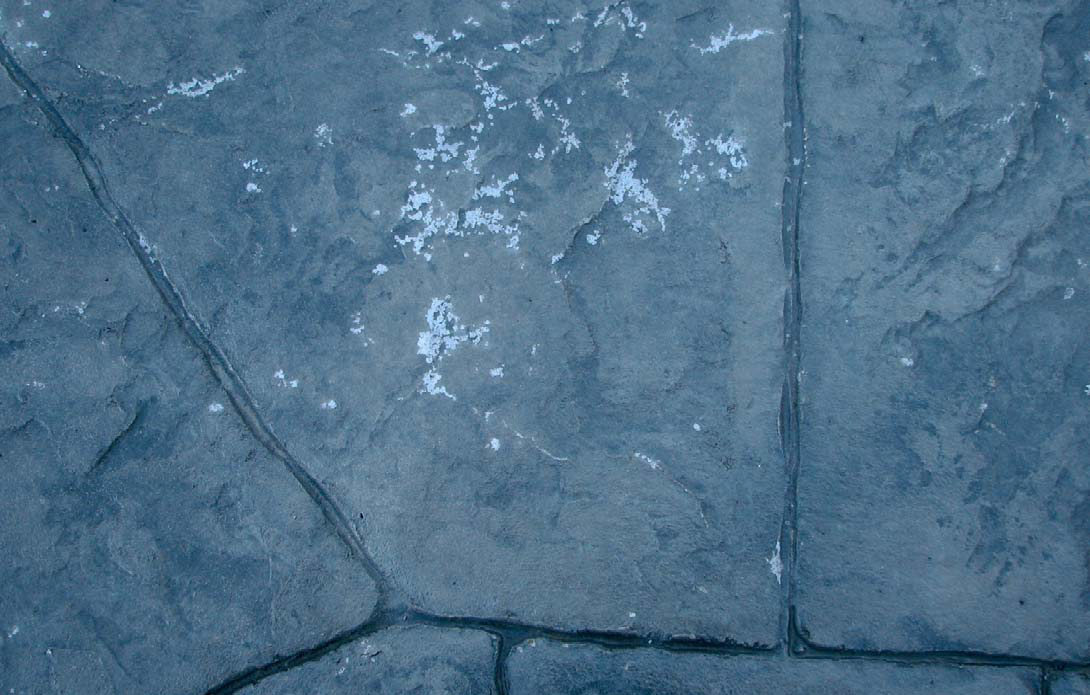
Since the reduced levels have become effective, we have seen many, many formula changes. They are good for our environment, but unfortunately not for the installers who have to use them on a daily basis. One sealer manufacturer’s premium-quality acrylic, once the best on the market, turned into total garbage with the VOC formula change. They made the changes needed to become compliant and the result was poor adhesion quality. This resulted in numerous problems for a lot of consumers who had used the product; after the first winter the stuff started to come right off the surface it was applied to. It did not matter if the new formula was applied to new concrete, previously sealed concrete, manufactured stone or natural stone, the end result was the same: peeling, delaminating and hot tire pickup. Some contractors have even gone to the trouble of ripping out and replacing the entire slab due to bad sealer issues.
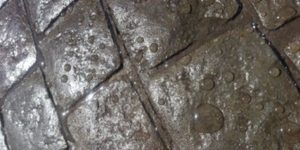
We have also seen a different sealer company, which manufactured a lower-grade product in its class, have trouble with their material after the changes to present-day compliance. Their products had turned very thick as a result of becoming VOC-compliant. The thicker-viscosity product, coupled with higher acetone levels, made their product skin over very fast, and as the product set, it would trap thousands of little bubbles in the coating. Also, large bubbles would form as a result of the product being applied in the sun and pooling in low areas of the pattern. If it was hot at the time of installation, this product suffered bonding abilities as well. This made for even more problems to correct.
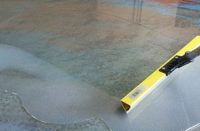
The high solid content of this type of sealer, loaded with acetone as a carrier, means it takes a bit of skill to install. A special T-bar applicator is needed to apply the material to the slab at the proper mileage rate needed for a successful coating. If the product is applied with a sprayer, you need acetone-resistant seals in the sprayer. Then the installer still needs to go over the material with the T-bar applicator to spread the product thin.
The poor performance issues described above have caused a lot of grief for installers throughout the entire VOC-compliant region. Ultimately, the sealer issues made a lot of homeowners gun-shy of pattern-stamped concrete. These issues have given our industry a black eye, but hopefully we can change that with better products and proper education on how to use them correctly.
Working with sealers
I got sick and tired of seeing all of our customers getting killed with sealer issues, so I set out on a personal quest to find a good, reliable product, one that we would be proud to sell. Along this journey we have looked into a bunch of different types of sealers, including water-based, solvent-based, and a new generation of hybrids.
Some of the new water-based sealers are very good. They look great, bond well and are economical. However, they can be a bit of trouble if not applied properly. Water-based sealers must be applied very thinly — about 250 to 300 square feet per gallon, with no puddling. Remember to back-roll excess material out of low areas of the pattern if necessary.
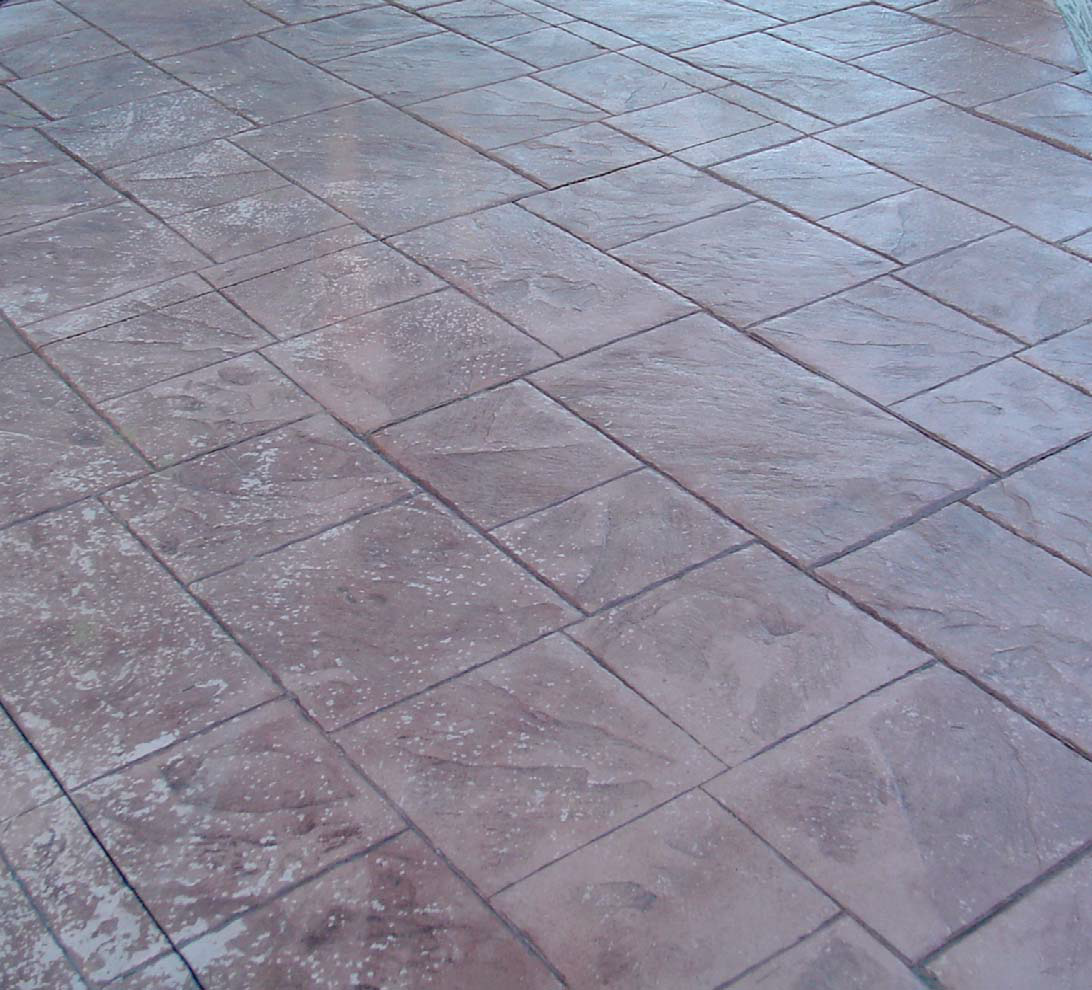
Then the first coat of sealer must dry completely and properly before the second coat is applied. The amount of time this will take depends on the environmental conditions at the time of application. Once the first coat is completely dry, repeat the process again to apply the second coat. This is good practice to use with all sealers, but it is extremely important when dealing with the water-based type. The industry in general is so used to the older solvent-based formulas where the timing to recoat was not critical. We used to apply the first coat, let it tack up, lay down another coat and jump in the truck and drive away. Today’s VOC-compliant formulas need time to allow the first coat to dry before recoating.
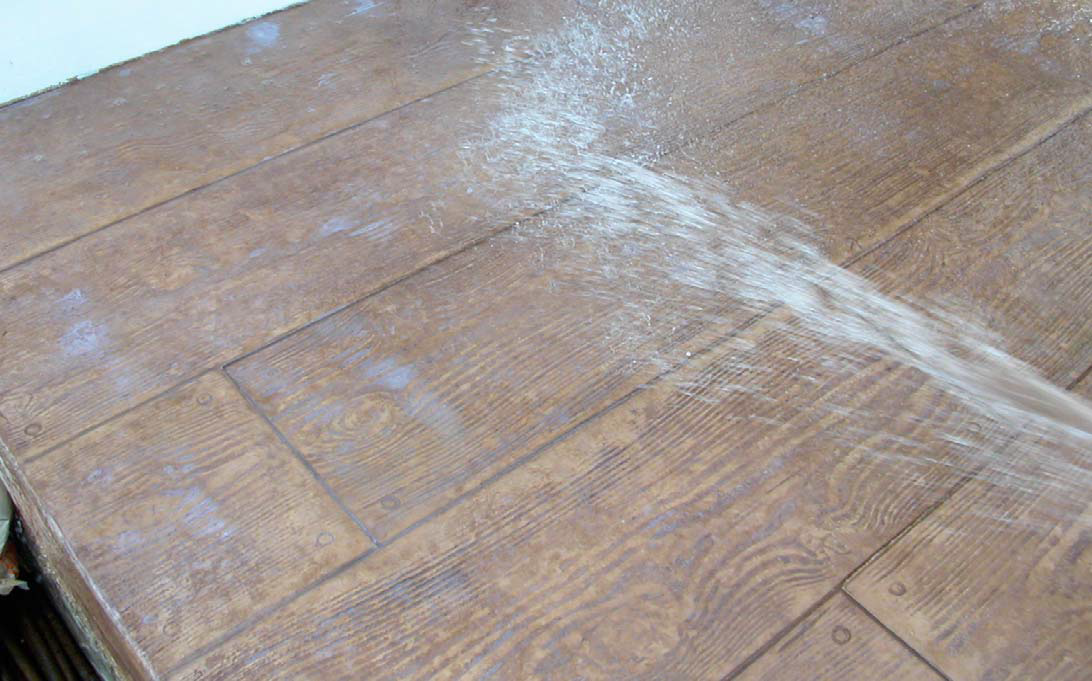
With the newer epoxy/acrylic hybrid sealers, it is very important to follow the proper steps of installation: Apply thin, then allow the first coat to dry completely before moving on to the second application. If the proper application technique is not followed, you will end up with a milky white appearance in the sealer. This usually goes away in a few days, but the bigger problem is that the product will take on a milky white appearance every time the sealer gets wet. The sealer will turn back to clear once the moisture has evaporated, and this oddity seems to have no effect on durability. But it is a shocking experience for the homeowner who has a dark-colored stamped driveway. Taking corrective measures are not difficult, but this does cost money and time to fix.
I have been asked if there is any kind of sealer out on the market that is foolproof. The natural-look penetrating types are just about as foolproof as you can get. You just apply to saturation point, broom the excess material out of low areas and control joints and leave it alone. Once this type of sealer has dried, you don’t even know it is there. The concrete will turn back to its natural color and it will give the appearance that nothing has been applied . until it gets wet. That is when you will see it work. Water will run right off. The drawback is that the penetrating sealers don’t pop the color up like the film-forming type sealers. However, they are highly effective for keeping water and surface contamination out of the pores of the slab.
To eliminate or reduce problems during application it would be best to start with knowing what type of material you will be using: solvent-based, water-based, or silane/siloxane types. This will give you an indication of how the product should appear and what type of problems can pop up during installation.
The no-gloss penetrating silane/siloxane type of sealer should be applied to concrete that has been cured at least two weeks and that has no other curing compounds or sealers applied.
Starting with a clean dry slab, apply the product to the concrete in a single, uniform application, saturating the surface. Next, broom out the excess material from the low-lying areas and control joints with a clean soft-bristle push broom. If a second application is specified or desired, the second coat may be applied in the same way after the first one has visually dried. The only thing to avoid is allowing the product to puddle in low-lying areas, as this may cause discoloration of the surface. Cleanup is generally done with soap and water before the product has had time to set up.
Water-based cure-and-seals can be applied directly to a fresh concrete slab or to a slab that has been installed for an extended period of time. On a fresh slab, it is advisable to apply the product after the concrete has set enough that it won’t be marked by the spray of product or by the application technique. An older, fully cured concrete slab must be clean and have no standing water on it. Apply thin, uniform coats by sprayer or roller, but the product must dry completely before a second coat is applied. Generally this is a low-gloss to medium-gloss product, and it cleans up with soap and water immediately after use.
Epoxy/acrylic hybrid sealers are similar to standard water-based sealers, but must be applied to concrete that has no standing water on the surface. They can be applied to fresh or cured concrete. The key to success with hybrid sealers is to apply them very, very thinly — 250 to 400 square feet per gallon — and the first coat must dry completely before the next coat is started. This type of sealer is available in a satin or gloss finish and cleans up with soap and water while the product is still fluid. They have a VOC level of about 100 grams per liter.
Solvent-based sealers are available in breathable-type cure-and-seals and also straight sealers that are not breathable. With this in mind you have to be informed of what type of sealer you have so you can apply the proper product to the substrate you are sealing. Fresh concrete requires a cure-and-seal product that is breathable. If you apply a straight sealer to a freshly poured slab you will most likely experience the sealer delaminating or blowing off the substrate due to the moisture content of the slab affecting the bond. Concrete cured more than 28 days can take either a straight sealer or a cure-and-seal product. Coverage is about 200 to 300 square feet per gallon.
No matter what type of product your project requires, it is advisable to apply thin, uniform coats. If it is a straight sealer, make sure the surface is completely dry at time of installation. Next, allow the first coat of sealer to dry until you can walk on the surface without being tacky. Then recoat with the final coat of product.
This type of sealer is generally a high gloss. To reduce slippage, Shark Grip anti-skid additive can be introduced to the final coat of sealer. Be careful about fumes. If used indoors, make sure the room is properly vented. If applied outdoors, beware of bright sunlight. Early-morning installation and a very hot day could very likely cause the product to bubble up. If you are applying on a day that the sun is very strong, apply the product before nightfall and let the sealer cure into the cooler part of the evening.
Cleanup of a solvent-based product is usually done with a solvent, and the normal application equipment is a sprayer fitted with the proper tip size or a roller.
This is a partial list of some of the problems that occur with newer VOC-compliant sealers. Even the best material can become a problem when placed in the wrong hands. It is important to keep all members of your crew informed, to the best of your ability, on product knowledge and application procedures. Check to be sure what type of product you are installing and make the effort to keep yourself and your crew educated.