

Tried and True Color Recipes Our annual summer feature offers step-by-step directions that will get contractors cooking on some distinctive concrete concoctions. by Elizabeth Gillette
Decorative concrete enthusiasts have their favorite recipes, just like chefs do, and if you ask, they’ll share their secrets with you. Concrete Decor did just that recently with several contractors and manufacturers. Here are some of their field-tested favorites.
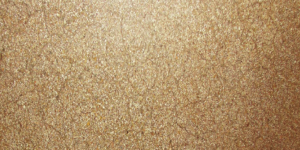
Antiquing a Stamped Overlay
John Anderson — IdealWork Europe
Trevor Foster — Miracote
Antiquing stampable overlays is taken for granted these days. However, there are many ways to achieve this effect. This method is a quick, consistent and effective way to achieve a beautiful antiqued look with Miracote products.
Ingredients: Miracote Mirastamp overlay — placed, stamped and cured
Miracote Mirastain II
Miracote ColorPax-LIP: Sandpiper Beige
2 gallons acetone
Directions:
Mirastain II is a water-and-acetone-based penetrating stain that can be mixed with any of the Miracote ColorPax-LIP liquid pigments. Sandpiper Beige was used for this application.
To begin, simply open the concentrated Mirastain II and, using a
high-viscosity mixer, start to blend the stain concentrate. While mixing, add the Sandpiper Beige ColorPax and two gallons of acetone. Mix for 3 minutes, and pour into a solvent-resistant pump-up sprayer.
Start to spray the Mirastain II in a circular motion about 18 inches above the floor. Because Mirastain II is made with water and acetone, it will settle into the low areas of the texture. It will penetrate deep into the overlay because of the acetone.
Within a few hours, after the stain has completely dried, you can seal over the Mirastain II, and it will look like a stamped concrete project with powder release.
Metallic Without Mud
Steven Ochs, Southern Arkansas University — Magnolia, Ark.
Ingredients: Smith Paints CT-8 cleaner
Smith Paints Color Floor products: White, Dark Chocolate, Metallic Gold, Silver or Copper
Sealer based on application
Directions: Clean surface with power washer using a zero-degree rotating tip. Apply solution of CT-8, one cup per gallon of water. Scrub with floor machine fitted with either Nylo-Grit or Malish diamond brush. Use 80 grit for most outside broomed finishes.
Allow to set for 15 minutes (do not let solution dry) then power wash. Transfer design to surface, being careful of excess dust created by the drawing material.
Paint in your highlights and shadows using only the White and Dark Chocolate. This technique, known as “Chiaroscuro,” was used by Leonardo da Vinci in the 1500s to create the illusion of high relief.
Roll on thin layers of one of the Smith metallic stains until you achieve the desired effect. Each layer will soften the contrast between the lights and darks as the metallic surface becomes stronger. This enables the metallic to be clean and crisp without being muddied by other pigments. Allow to dry/cure for 24 hours before sealing.
The sealer used on this job was a polyaspartic polyurea from Flexmar with 16 ounces of Arizona Polymer’s Resin Sand (40 grit and 60 grit) added per gallon for safety.
Refurbishing an Existing Interior Slab with Microtopping, Dye, and Sealer
QC Construction Products — Madera, Calif.
Ingredients:
QC Concrete Resurfacer HD base coat: Gray
QC Concrete Resurfacer HD finish coat: White
QC Concrete Resurfacer HD mix liquid
QC Concrete Dye: Warm Honey
QC Surpro water-based polyurethane matte sealer
QC Natural Beauty maintenance topcoat finish
Directions: Surface preparation requires mechanical grinding of the surface to achieve a No. 2 on the ICRI surface profile scale. All surface glue or mastic must be removed so the surface is smooth and free from contamination.
Mix 2.5 gallons of QC Concrete Resurfacer HD mix liquid and 1 bag of QC concrete resurfacer HD base coat powder in a pail. Mix for 2 minutes or until the material is lump free and has a smooth consistency. Apply the gray QC base coat with a trowel, squeegee or 3/4-inch nap roller. Apply 150 square feet to 200 square feet. Dry for 3 hours. Repeat the gray base coat application process to achieve a final thickness of close to 1/8 inch. Dry for 3 hours.
Mix 2.5 gallons of QC Concrete Resurfacer HD mix liquid with 1 bag of QC Concrete Resurfacer HD white finish coat powder in a new clean pail. Mix for 2 minutes. Apply with a trowel to create random trowel marks and movement in the final finish of the white finish coat. Apply 200 square feet to 300 square feet. Feel free to “burn” the material to produce even more variegation and movement in the finish coat. Dry for 24 hours.
QC Concrete Dye Warm Honey can either be used in a water base or solvent base. Dilute the dye with 25 percent acetone or water. Spray the dye with pump or airless sprayer. Dry for 30 minutes. Repeat to achieve the desired final color intensity. Typically, two coats of QC Concrete Dye are sufficient. Dry for 2 to 4 hours.
Use a soft broom or vacuum to clean the floor. Mix the entire Surpro WB kit (parts A and B) in a clean plastic mixing container with a mechanical mixer at low speed for 1 minute. Apply the QC Surpro WB with a Padco lightweight spreader at a rate of 300 square feet per gallon. Let dry 4 to 6 hours. Apply a second coat. Dry for 24 hours. Apply QC Natural Beauty with a Padco heavy-weight spreader at a rate of 600 square feet to 800 square feet per gallon. Dry for 12 hours. Apply QC Natural Beauty matte finish as needed to maintain the floor.
Simple Recipe for Colored Texture
Proline Stamps — Oceanside, Calif.
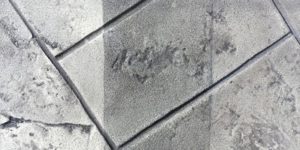
This simple recipe uses Proline’s Sand Canyon Dura-Color Hardener and their Seamless Designs Carpet Stamp. Two colors of EZ Tique were used to give the finish its mottled look.
Directions: Float the Dura-Color Hardener into the surface of the prepared slab.
Apply the Dura-Liquid Release to the Carpet Stamp and the slab before laying the stamp and tamping it in.
After the slab has cured, wet it down, and mix EZ Tique with water. You should have one batch of Mocha and one of Midnight Gray. Starting with the Mocha, apply the EZ Tique with a soft bristle brush over the entire slab. While the first coat is still wet, go back with the Midnight Gray and a small brush. Apply as an accent color in select areas.
Finally, apply Dura-Seal to finish.
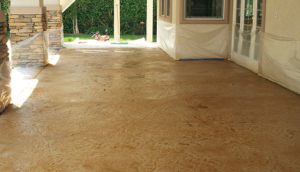
Super Overlay System
Super-Krete — El Cajon, Calif.
Ingredients:
S-12000 Heavy Duty Degreaser
S-1300 Pene-Krete
S-1800/S-1801 Super-Stamp: Gray or White
S-2000 Integral Color
S-9500 Color Stain
S-1710 Liquid Release Agent
Proline Texture Stamp:Random Garden Stone Pattern
S-200 Super-Scrub
Super-Krete sealer of choice
S-16000 Flex Smoother
S-19000 Gauge Rake, set with 1/4-inch Cams
Directions: All existing concrete surfaces must be structurally sound, solid and completely clean. Remove all sealers, curing compounds, curing agents, dust, dirt, oil and other contaminants that may act as a bond-breaker.
Mix each bag of Super-Stamp with 4 quarts to 5 quarts of clean water per bag. Additional water may be required in warmer climates to achieve a pancake-batter consistency. Less water may be used in cooler weather or on cold concrete. This system does not require a surface bonding agent.
Mist the concrete surface with water and, from the wall out, apply Super-Stamp with a gauge rake at a 1/4-inch thickness evenly over the surface at a rate of approximately 25 square feet per bag. Use a Flex Smoother to remove any lines that may appear from the gauge rake application. A light mist of water on the overlay will assist in finishing. Remember to honor all expansion joints by marking them with a trowel, and clear Super-Stamp out of those areas completely, following the line of the joint from beginning to end.
Allow Super-Stamp to set so that it is pliable, but do not allow Super-Stamp to set completely before the surface is stamped/textured. Overlay is to be pliable, but not sticking to the touch or tools.
Using a hand-held sprayer, spray Liquid Release Agent onto the stamp tool and onto the surface area to be stamped simultaneously. Do not spray Liquid Release Agent too far ahead as it will evaporate before you are able to get to the area and stamp it.
Lay the stamps onto the surface, and either walk or tamp in the impression. Then remove the stamp, move to an unimprinted area and repeat the process until the entire surface has the impression of the stamps. Be sure to lock the stamps tightly together to create your pattern when stamping. Pay attention to the lines, joints and details of the pattern when placing the stamps side by side. Always check the impression before you remove the stamp to ensure the pattern has been fully compressed into Super-Stamp. Allow Super-Stamp to completely dry for at least 24 hours.
On the following day, tool out the unclean grout lines, and use a diamond cut blade to open the expansion joints. Sweep or blow off all debris.
Wet the stamped area with water and clean the entire surface with Super-Scrub using a broom. Rinse surface thoroughly with clean water.
Breathing Light Into Your Work
Steven Ochs, Southern Arkansas University — Magnolia, Ark.
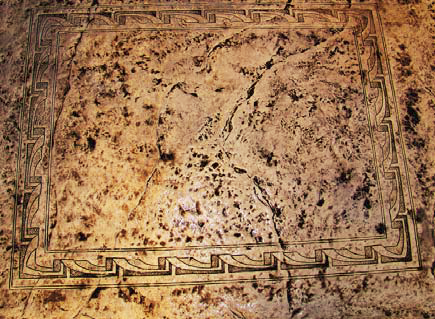
When you have a dark grey slab, you have to take into consideration how that will affect color and its intensity. Most of the colorants on the market differ as much in transparency as concrete differs in color and porosity. Sometimes, you have to keep applying layers to build up the color you want, and by the time you get done, you have lost the interesting characteristics in the concrete.
Here is a method that will give you accuracy among these variables, reduce the amount of product needed, and save you time.
This technique was a favorite of the Flemish painters of the Early Renaissance. They would build up transparent “glazes” of oil paint over wood covered in a white base. Now, as the light strikes the surface, it penetrates through the layers and reflects back.
Ingredients:
Smith Paints CT-8 cleaner
Smith Paints Color Floor products: White, Natural (gray)
Sealer: based on application.
Directions: Clean surface with power washer using a zero-degree rotating tip. Apply solution of CT-8, one cup per gallon of water. Scrub with floor machine fitted with either Nylo-Grit or Malish diamond brush. Use 80 grit for most outside broomed finishes. Allow to set for 15 minutes (do not let solution dry) then power-wash off.
Depending on the base color needed, mix the natural to the white and expect for it to dry two or three shades darker. This will even out flaws, stains and color differences due to different batches. If you really want your colors bright, stain the area with pure white.
Transfer the design to the surface. Now that the concrete is sealed with the stain, there is less chance of dust getting into the slab from drawing media.
As you can tell from the photo, the toes of the claw had a base coat of white beneath the red. This allowed the red to rise up from the dull gray slab without the artisan having to apply multiple layers of stain.
The sealer used on this job was a one-part from Xymax with a nonslip aggregate added for safety.
Broom Finish
Super-Krete — El Cajon, Calif.
Broom finishes provide an economical alternative to the removal and replacement of existing concrete. This system creates a flexible and durable finish that can be used to re-level, renovate, resurface and create decorative patterns and designs, with or without integral coloring. When sealed, the new finish will resist gas, oils, water, salts, freeze-thaw cycles and ultraviolet rays.
Ingredients:
S-12000 Heavy Duty Degreaser
S-1300 Pene-Krete
S-9300/S-9302 Bond-Kote: Gray or White
Super-Krete sealer of choice
Directions: Surface to be coated should be kept damp with clean water at all times during application of material. Dampen the surface, not allowing water to puddle.
Prepare a Bond-Kote mixture by adding the desired amount of water to one bag to achieve a flowable, pourable mixture. Mix material well with a jiffy mixer. The actual amount of water needed will vary depending on outside factors such as weather conditions.
Fill spalls and holes with a dry-slump Bond-Kote mixture, feathering the edges with a trowel and water. Allow the patches to dry. Then, mist the entire surface with water, not allowing it to puddle. Pour the Bond-Kote mixture onto the surface. Apply Bond-Kote at an approximate rate of 300 square feet per bag with a squeegee. Two applications are required.
Apply the second coat of Bond-Kote with a squeegee and follow the squeegee application with a soft-bristled broom, also at 300 square feet per bag, to create a broom finish. Additional coats may be required to achieve the desired finish. Sanding may also be required if ridges are present on the surface to smooth them.
After applying the final coat of Bond-Kote, always wait 24 hours before applying any other coatings or sealers.
Apply a minimum of two coats of the Super-Krete sealer of choice.