
Search
Subscribe
  • Concrete Decor Show
  • Customer Support
  • Contact Us
  • Advertising
  • About Us
  • Home
  • Departments
  • Archives
  • Digital Issues
  • Blogs
  • Products
  • Training
  • Videos
  • Bookstore
  • Science

Vol. 12 No. 1 - January 2012

Order this Issue
Subscribe

  • Vol. 12 No. 2 - Feb/Mar 2012
  • Vol. 12 No. 1 - January 2012
    • Fundamentals of Business
    • Artisan in Concrete: Gaye Goodman, Faux Real LLC, Albuquerque, N.M.
    • Stars of the Strip
    • Decorative Concrete Around the World
    • Carlton’s Corner: Getting the Most Out of Educational Opportunities
    • Product Focus: Deco-Con Wizard, from Depiction Software
    • Project Profiles: Faux Ice and Water, Calgary, Alberta, and four citiies, Florida
    • Product Focus: ALX and MACoat from Westcoat Specialty Coating Systems
    • Project Profiles: Three Bar Tops, New England
    • Project Profile: Southern Ute Cultural Center & Museum
    • Working with Your Ready-Mix Supplier to Maintain Color Consistency in Large Decorative Pours
    • Project Profile: National History Museum of Los Angeles County
    • How Reading the Specifications Can Help Your Wallet
    • The Four Types of Overlays and How to Choose One
    • How To: Prep for a Staining Job
    • Trowel & Error: Coloring Concrete in Winter Weather
    • How Stamping Contractors Should Handle Maintenance
    • Project Profile: Silicon Valley Sculpted Hillside, Saratoga, Calif.
  • Vol. 11 No. 8 - Nov/Dec 2011
  • Vol. 11 No. 7 - October 2011
  • Vol. 11 No. 6 - Aug/Sept 2011
  • Vol. 11 No. 5 - July 2011
  • Vol. 11 No. 4 - May/June 2011
  • Vol. 11 No. 3 - April 2011
  • Vol. 11 No. 2 - Feb/Mar 2011
  • Vol. 11 No. 1 - January 2011
  • Vol. 10 No. 8 - Nov/Dec 2010
  • Vol. 10 No. 7 - October 2010
  • Vol. 10 No. 6 - Aug/Sept 2010
  • Vol. 10 No. 5 - July 2010
  • Vol. 10 No. 4 - May/June 2010
  • Vol. 10 No. 3 - April 2010
  • Vol. 10 No. 2 - Feb/Mar 2010
  • Vol. 10 No. 1 - January 2010
  • Vol. 9 No. 7 - Nov/Dec 2009
  • View More


View Newsletter

 Concrete Coatings 

Product Focus: ALX and MACoat from Westcoat Specialty Coating Systems

Photos courtesy of Westcoat Specialty Coating Systems
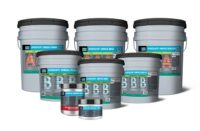
Second-story decks are popular outdoor spaces in both residential and commercial buildings, but unless they are waterproofed in some fashion, the space underneath can essentially be useless or even get destroyed. In order to help combat moisture problems, Westcoat Specialty Coating Systems offers two popular and proven waterproofing coating systems: ALX and MACoat.

ALX is specially designed for application over plywood substrates. With that in mind, the coating includes a reinforced galvanized metal lath. The lath only weighs 2.5 pounds per square foot.

ALX can also be used for interior applications as a decorative topping designed to resurface a plain plywood subfloor into a decorative, water-resistant, concretelike finish. It can be used for living areas, lobbies, offices, restaurants and hotels or wherever a thin, decorative and durable floor finish is desired over plywood.

MACoat on the other hand, is designed to be applied over concrete surfaces. It uses a fiber lath for reinforcement and as a result is very lightweight.

Despite their obvious differences, the two coatings are pretty similar, according to their manufacturer. “From a performance standpoint, they do the same thing,” says Matt Ranzau, a sales representative for Westcoat who specializes in waterproof coatings.
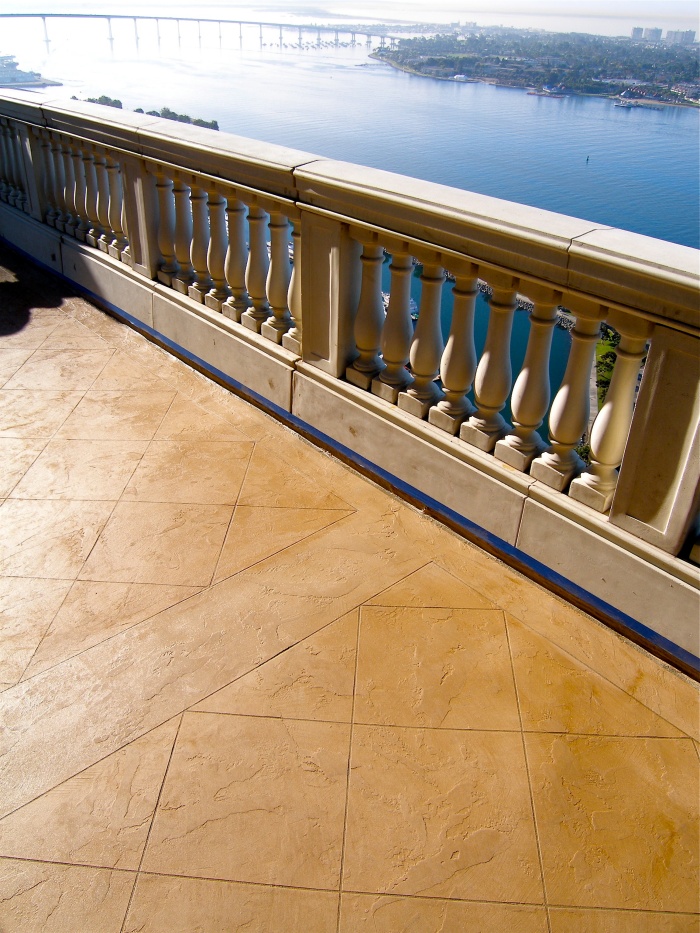
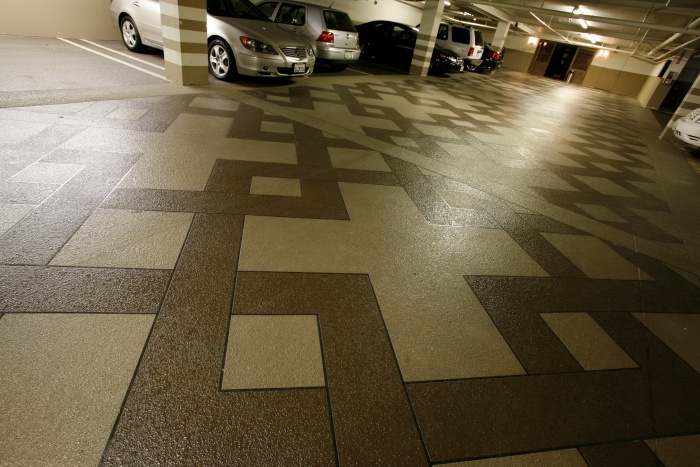
Both systems provide barriers to moisture by utilizing layers of acrylic resins and cement blends, with layers applied in steps. Ranzau lists three main advantages they have compared to polyurethane coatings: they are environmentally friendly, fast-drying and offer a variety of decorative finishes. “Westcoat waterproof deck coatings can be made to look like tile, slate or flagstone, and in any color you can imagine,” he notes. “ALX and MACoat not only offer outstanding waterproofing capabilities but also enhance the look of balconies, walkways, decks and other high-traffic areas.”

The products can only be applied between 55 F and 95 F, and depending on temperature, each layer takes two to six hours to dry. The surface can also be opened up to pedestrian traffic for use between coats.

For contractors who are familiar with resurfacing methods, applying ALX or MACoat is a fairly standard job.

“Many of the components in our waterproof systems are what a lot of resurfacing contractors are already using,” Ranzau says. “The systems are going to have a familiarity that will result in an easier installation and potentially better profit margin.”

www.westcoat.com

 

Matt Ranzau, sales representative for Westcoat, will be presenting "New Opportunities in Waterproof Coating Systems" at the Concrete Decor Show on Wednesday,
Feb. 22.  Register Now


Home  |   Departments  |   Archives  |   Digital Issues  |   Blogs  |   Products  |   Training  |   Videos  |   Bookstore  |   Links  |   Glossary

©2012 Concrete Decor Magazine. Unauthorized reproduction of any information on this site is a violation of existing copyright laws. All rights reserved.