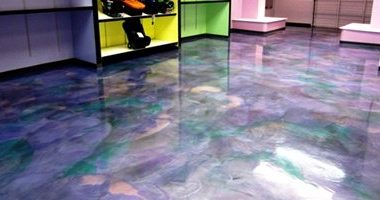
Don Pinger, Custom Concrete Solutions, West Hartford, Conn., used a unique combination of dyes and metallic epoxy to achieve a neat, radiant floor for this baby accessories shop.

The world's foremost resource on decorative concrete
Coatings are liquid or semi-liquid mixtures applied to cured concrete to make it more aesthetically pleasing, improve its durability, boost its longevity and/or reduce upkeep and repairs.
Don Pinger, Custom Concrete Solutions, West Hartford, Conn., used a unique combination of dyes and metallic epoxy to achieve a neat, radiant floor for this baby accessories shop.
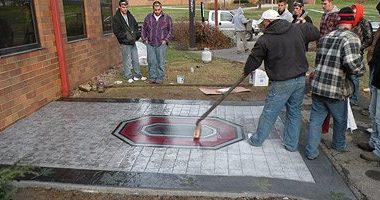
Using grit additives has become the most common method for reducing slipperiness when sealing decorative concrete flatwork on exterior walking surfaces. The grit additives are mixed into the sealer, then the gritty sealer is applied to the concrete. However, in this situation the weather was too cold to reseal the concrete. So another method needs to be used until springtime arrives and temperatures rise.
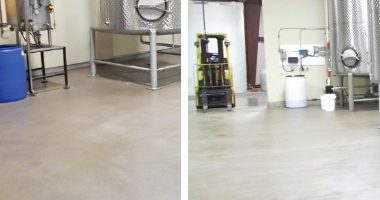
A vinegar-producing company needed a heat- and chemical-resistant floor for their busy production facility. TNT Resurfacing partnered with Azevedo Concrete to install Westcoat’s premier urethane cement system,Temper-Crete, throughout the 1,450-square-foot processing area.
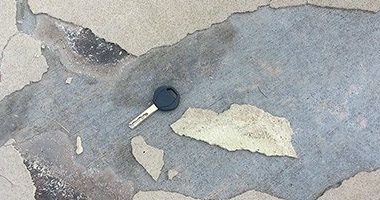
“Just apply a decorative overlay and it will hide everything.” Or, “Use acid to strip that sealer.” These are just a couple of the myths or just plain wrong recommendations concrete contractors may have come across recently.
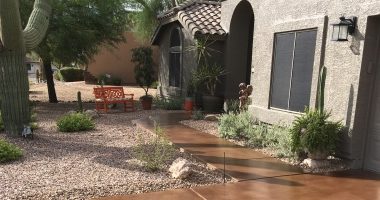
Contractors have relied on acrylic sealers for decades to protect concrete flooring systems, and for good reason. In the right conditions, these sealers offer optimal durability, stain resistance and a desirable “wet look” finish. However, they have their limitations too and aren’t always the ideal option for high-traffic areas and environments with extreme hazards.
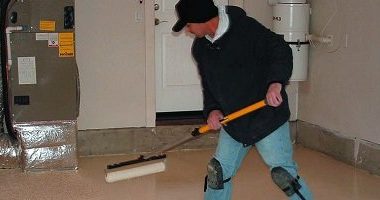
When a pair of specialists from Versatile Building Products made a January trek from California to Oregon to coat a concrete floor, their first concern was the cold.
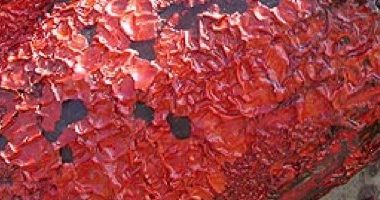
Many decorative jobs require cleaning up an existing slab. Here’s a look at products that remove paint, rust, adhesives or grease.
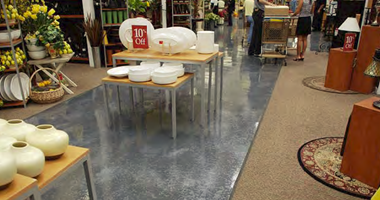
The big national chain needed a ritzy floor for one of its new high-end home furnishing stores. A San Diego contactor brought the glamour, including metallics and a pearl finish.
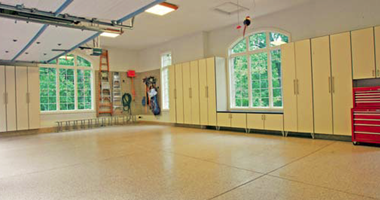
A garage floor is one heck of a challenging place for the beautiful artwork and skillful craftsmanship of a decorative concrete application. Hot tires, oil, battery acid, brake fluid and strong coffee make daily assaults on an applicator’s masterpiece.
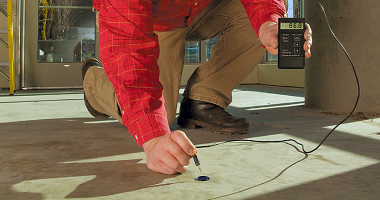
When good floor coatings go bad, moisture is often the culprit.
Even cured concrete can emit enough moisture to blister, cloud or delaminate a coating, especially when a slab with no vapor barrier sits on ground with poor drainage. The manufacturers of overlays, microcoatings, sealers and specialty coatings set moisture tolerance limits for their products.


